

What goes on a roofing estimate
Nobody can see a roof deck until the old roof is off, which gives a roofing estimate one job above all others: price the deck as a stated unit rate for a stated unknown. Quote as though it is sound and you will be asking for more later; pad it for rot that is not there and you lose the job to somebody who did not.
- The area in squares, because that is how material is sold and how rivals quoted it
- Tear-off and haul-away as their own line — a large share of the labor
- Underlayment, ice and water shield, drip edge and flashing, itemized
- Decking as a price per sheet, charged only if it is needed
- Ridge and soffit ventilation, which is the line most often quietly left out
- The manufacturer warranty, and your own workmanship warranty, with its term
- How long the price stands, and a line to sign to go ahead
The sample line items and example prices this sheet opens with are on the roofing invoice template — the same table, which is about the trade rather than about this paper, so it lives in one place rather than on all six. Working out the price itself? The markup calculator turns your cost and markup into the figure to put on the estimate, and shows the margin it leaves.
What you get
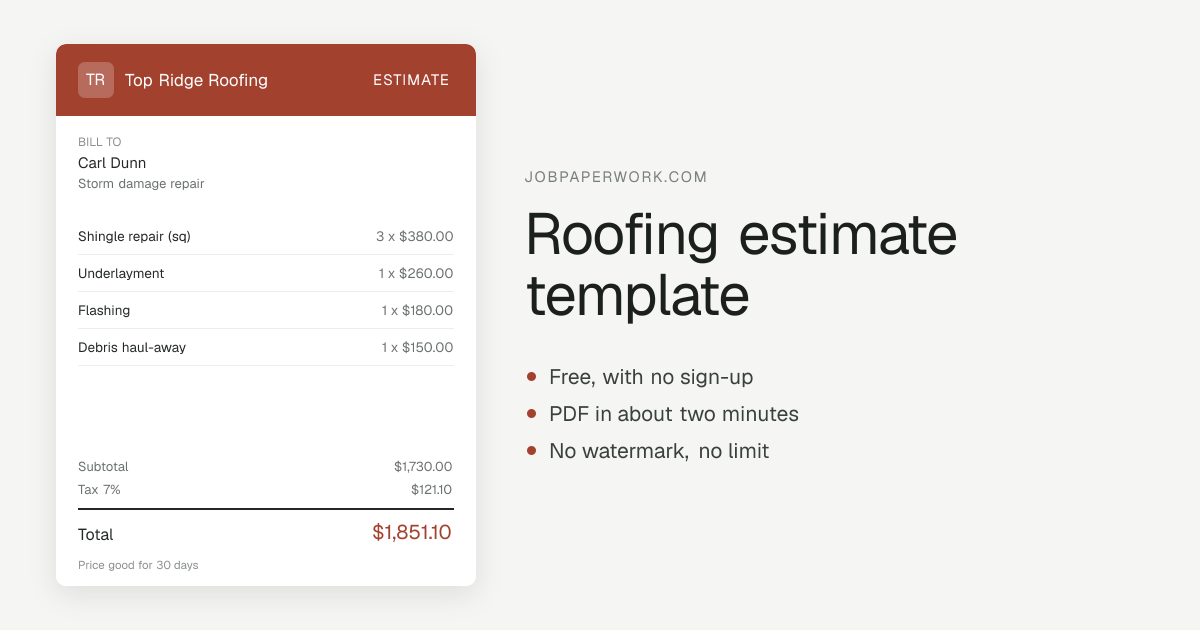
A PDF, and a link your customer can open in any browser. Word and Excel versions are not available yet — if a spreadsheet is what you need, this is not yet the tool for it, and saying so is cheaper for both of us than you finding out after typing everything in.
Pick how it looks
Six looks, from a plain classic sheet through a bold top band to a shop ticket, and your initials go on automatically until you upload a logo. See all six.
How to send it
Most customers want the paper on their phone, so the estimate goes out by WhatsApp, text or email, or as a link that needs no app and no account on their side. Or download the PDF to print it or keep it for your own records.
Questions
What do I put on a roofing estimate about the decking?
A price per sheet and a note that it is only charged if it is needed. You cannot see the deck until the old roof is off, and the two ways this goes wrong are quoting as if it is sound and then asking for more, or padding the price for rot that is not there. A named unit price for a stated unknown is neither.
Should tear-off and haul-away be separate lines?
Yes. They are a large share of the labor and the only part of the job a homeowner might do themselves or arrange cheaper, so a customer comparing two roofers needs to see whether both prices include it. One total hides it and loses the comparison.
Do I estimate in squares or square feet?
Squares, because that is how material is sold and how every other roofer on the street will have quoted it. Put the square footage next to it if the customer is the kind who will check, but price the job in the unit the trade actually uses.