

What goes on a roofing service agreement
Commercial flat roofs need looking at, and nobody looks at one until water appears inside. An inspection agreement turns that into two visits a year — and it protects something the building owner usually does not realize is at risk, which is the manufacturer’s warranty on a roof that was never maintained.
- The roofs covered, by building, with area and system type
- Inspection frequency — twice a year is usual, spring and autumn
- What the inspection covers: seams, flashings, drains, penetrations, ponding
- Gutter and drain clearing, in or out
- Minor repairs included up to a stated value
- The report produced, with photographs, and who receives it
- The term, the rate for larger repairs, and the notice to end it
The sample line items and example prices this sheet opens with are on the roofing invoice template — the same table, which is about the trade rather than about this paper, so it lives in one place rather than on all six.
What you get
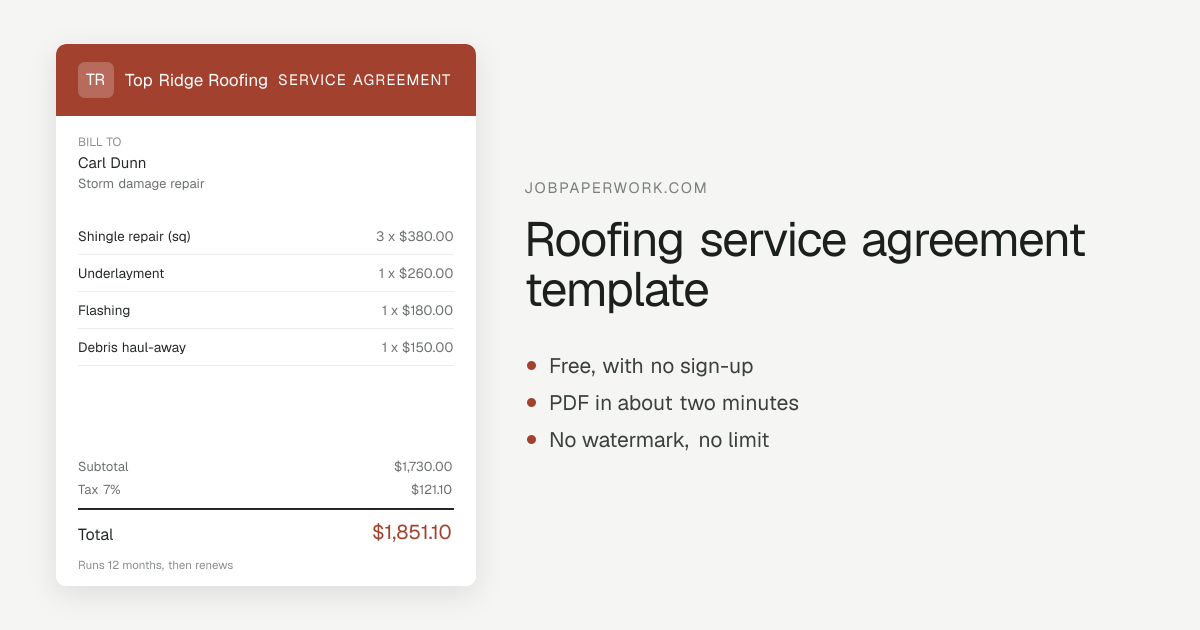
A PDF, and a link your customer can open in any browser. Word and Excel versions are not available yet — if a spreadsheet is what you need, this is not yet the tool for it, and saying so is cheaper for both of us than you finding out after typing everything in.
Pick how it looks
Six looks, from a plain classic sheet through a bold top band to a shop ticket, and your initials go on automatically until you upload a logo. See all six.
How to send it
Most customers want the paper on their phone, so the service agreement goes out by WhatsApp, text or email, or as a link that needs no app and no account on their side. Or download the PDF to print it or keep it for your own records.
Questions
What is a roof inspection agreement actually protecting?
Two things. The obvious one is catching a failed seam before it becomes a ceiling. The less obvious one is the manufacturer’s warranty, which on most commercial systems requires documented maintenance — a building owner who never had the roof inspected may find the warranty went void years ago.
What should the report include?
Photographs, and the same views every time. A report saying “flashings satisfactory” is worth little; the same six photographs taken every six months show what is changing, and that is what justifies a repair before it becomes a replacement.