

What goes on a pressure washing service agreement
Commercial frontages go on a round: quarterly, monthly, or weekly on a food site. The agreement is simple, and the two things it has to settle are when you are allowed on site and what the surface is expected to look like, because “clean” is a word two people will define differently.
- The sites and the surfaces, with the area of each
- The frequency, and the window you may work in
- What each visit includes, and what is seasonal
- The standard expected, described rather than named
- Access, keys, alarms, and who to contact out of hours
- Water and power: supplied on site, or brought by you
- The price per visit or per month, the term, and the notice
The sample line items and example prices this sheet opens with are on the pressure washing invoice template — the same table, which is about the trade rather than about this paper, so it lives in one place rather than on all six.
What you get
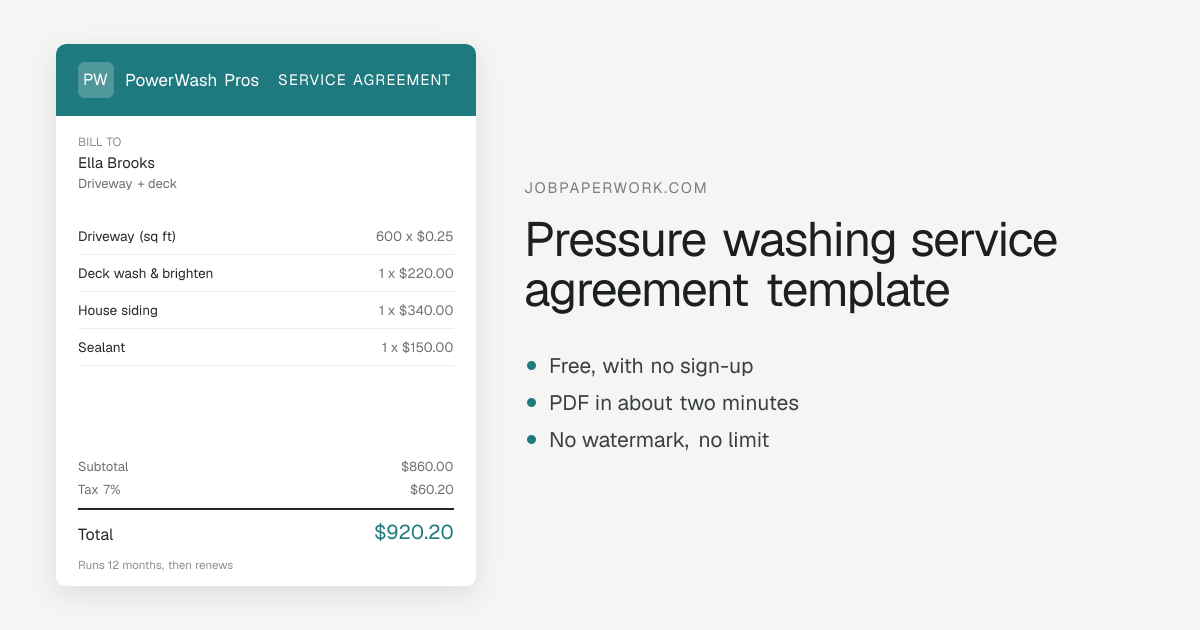
A PDF, and a link your customer can open in any browser. Word and Excel versions are not available yet — if a spreadsheet is what you need, this is not yet the tool for it, and saying so is cheaper for both of us than you finding out after typing everything in.
Pick how it looks
Six looks, from a plain classic sheet through a bold top band to a shop ticket, and your initials go on automatically until you upload a logo. See all six.
How to send it
Most customers want the paper on their phone, so the service agreement goes out by WhatsApp, text or email, or as a link that needs no app and no account on their side. Or download the PDF to print it or keep it for your own records.
Questions
How do I describe the standard without arguing about it later?
With photographs taken after the first clean, attached to the agreement. “Clean” is subjective and staining on old concrete rarely comes out entirely; a picture of what the surface looks like when you have finished sets the expectation better than any sentence could.
What hours should a commercial agreement allow?
Whatever the site needs, said explicitly. A shopfront has to be done before opening and a parking lot cannot be done while it is full, and an agreement that does not name the window is one where you turn up and cannot work. Early starts cost more; price them in.