

What goes on a painting service agreement
Repaint cycles are the repeat business in painting: a property manager’s portfolio, an apartment building, a chain of units. The work is predictable and the margin is in the scheduling — knowing in January what you will be painting in June is worth more than the rate on any single job.
- The properties or units covered, with the cycle for each
- What a repaint includes: which rooms, which surfaces, how many coats
- The standard colors and products, so nothing has to be decided per visit
- Turnaround per unit, which on a rental turnover is the whole point
- Patching: filling, minor repairs, and what is charged as extra
- The rate, and whether it is per unit, per room or per day
- The term, the notice period, and when the rate is reviewed
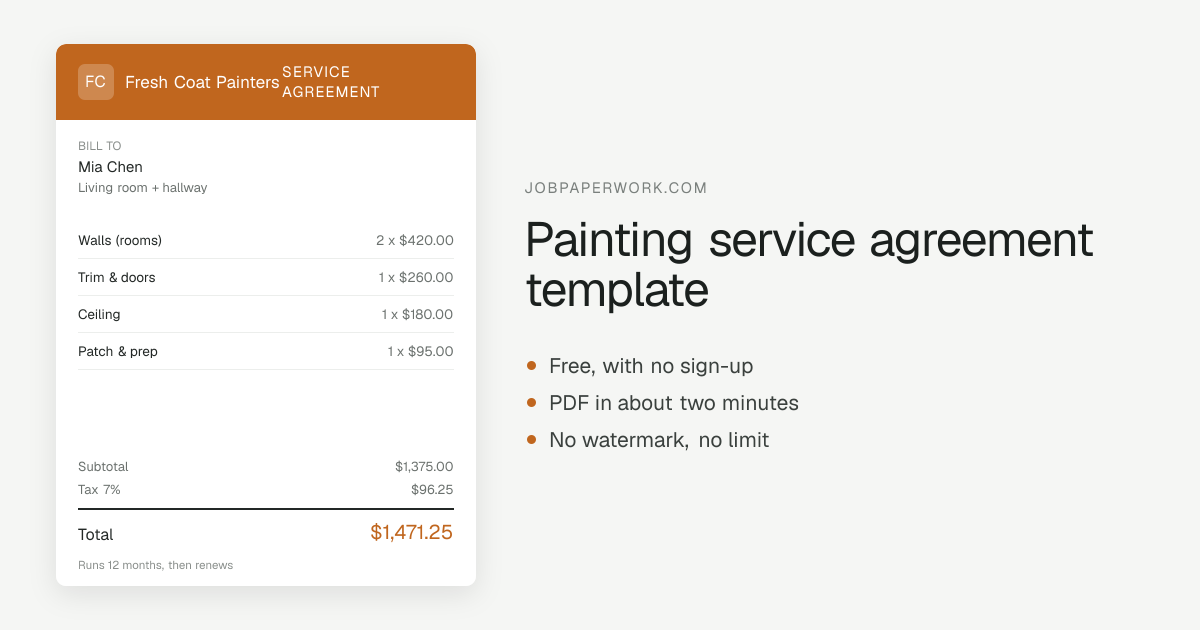
The sample line items and example prices this sheet opens with are on the painting invoice template — the same table, which is about the trade rather than about this paper, so it lives in one place rather than on all six.
What you get
A PDF, and a link your customer can open in any browser. Word and Excel versions are not available yet — if a spreadsheet is what you need, this is not yet the tool for it, and saying so is cheaper for both of us than you finding out after typing everything in.
Pick how it looks
Six looks, from a plain classic sheet through a bold top band to a shop ticket, and your initials go on automatically until you upload a logo. See all six.
How to send it
Most customers want the paper on their phone, so the service agreement goes out by WhatsApp, text or email, or as a link that needs no app and no account on their side. Or download the PDF to print it or keep it for your own records.
Questions
What do property managers actually want from a painting agreement?
Speed. A void property earns nothing, so the agent is buying a two-day turnaround far more than a price per room. Put the turnaround on the agreement and agree what has to be true for it to hold — access, vacant, power on.
Should the colors be fixed in the agreement?
Yes, and it saves more time than anything else in it. One white, one trim color, one product, agreed once, means no decision per property, no mismatched touch-ups, and no half-tins of twenty shades rolling round the van.