

What goes on a painting receipt
Interior work gets paid when the last room is done and the drop cloths come up, which is usually the moment the customer is happiest. The receipt is short, but it should carry the paint — because in two years they will want to touch up a scuff and will have no idea what color it was.
- The date paid, and the property
- The rooms or elevations completed
- The paint used: brand, product, color name and code, and the sheen
- How many coats went on, and over what
- Any leftover paint left with them
- Labor, and how it was paid
- Any warranty on the work, and what it does not cover
The sample line items and example prices this sheet opens with are on the painting invoice template — the same table, which is about the trade rather than about this paper, so it lives in one place rather than on all six.
What you get
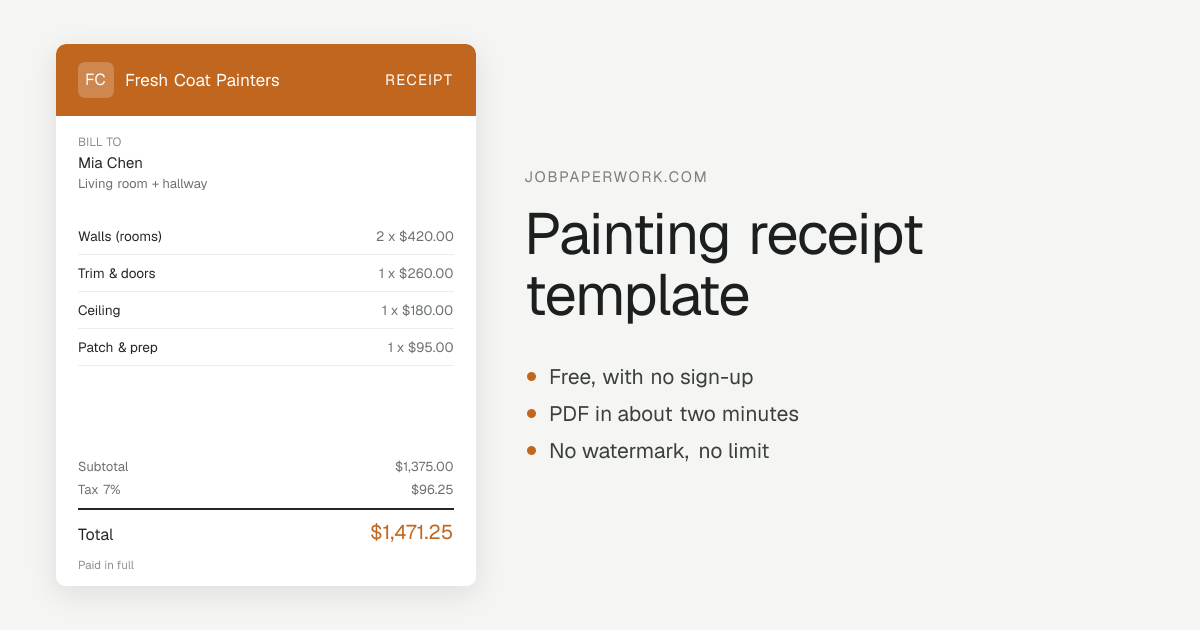
A PDF, and a link your customer can open in any browser. Word and Excel versions are not available yet — if a spreadsheet is what you need, this is not yet the tool for it, and saying so is cheaper for both of us than you finding out after typing everything in.
Pick how it looks
Six looks, from a plain classic sheet through a bold top band to a shop ticket, and your initials go on automatically until you upload a logo. See all six.
How to send it
Most customers want the paper on their phone, so the receipt goes out by WhatsApp, text or email, or as a link that needs no app and no account on their side. Or download the PDF to print it or keep it for your own records.
Questions
Why put the color code on the receipt?
Because the customer will need it long after they have lost the tin. A scuff two years later is a five-minute touch-up if the code is on a piece of paper they kept, and a repainted wall if it is not. It is also the single most appreciated line on a painter’s paperwork.
Should I leave leftover paint with the customer?
Usually yes, and note it on the receipt. It is theirs — they paid for it — and it solves the touch-up problem better than anything else. Writing it down also settles the question of where half a tin went.