

What goes on a flooring receipt
Material deposits are the norm, because flooring is ordered in and cut to a room. The receipt records what was paid and, more usefully, exactly what was ordered — because a customer who later wants a matching repair will have thrown everything else away.
- The date paid, and the amount
- What was ordered: range, color, batch and quantity
- Whether the deposit covers material, labor, or both
- The expected delivery date, and the fitting date
- The balance remaining, and when it falls due
- The property and the rooms
- How it was paid
The sample line items and example prices this sheet opens with are on the flooring invoice template — the same table, which is about the trade rather than about this paper, so it lives in one place rather than on all six.
What you get
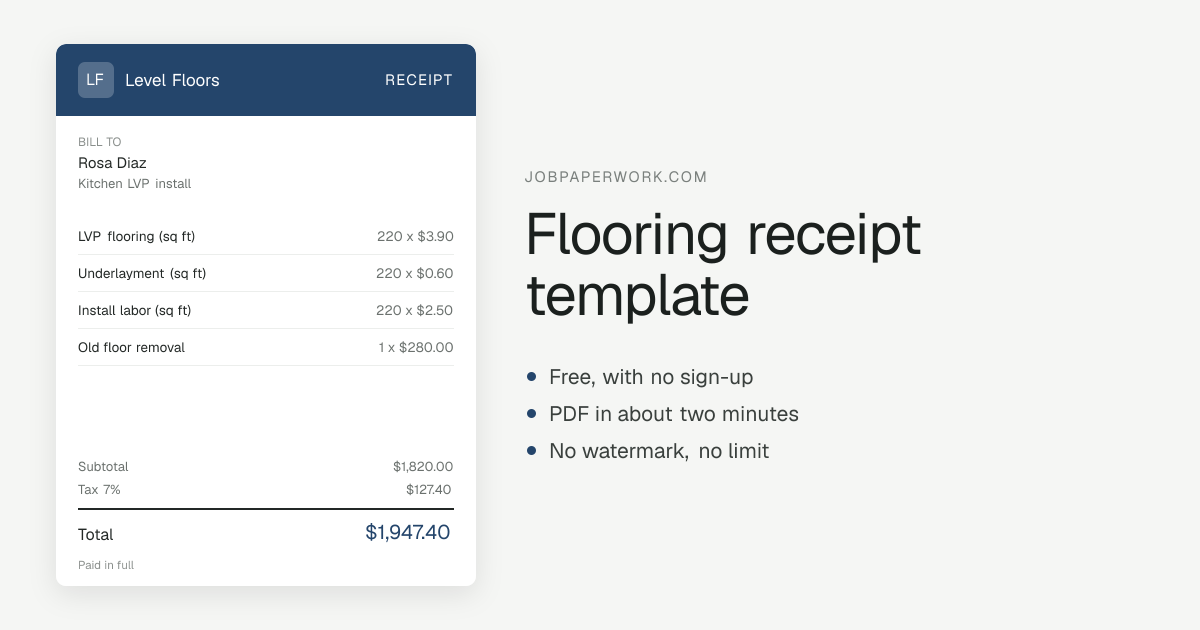
A PDF, and a link your customer can open in any browser. Word and Excel versions are not available yet — if a spreadsheet is what you need, this is not yet the tool for it, and saying so is cheaper for both of us than you finding out after typing everything in.
Pick how it looks
Six looks, from a plain classic sheet through a bold top band to a shop ticket, and your initials go on automatically until you upload a logo. See all six.
How to send it
Most customers want the paper on their phone, so the receipt goes out by WhatsApp, text or email, or as a link that needs no app and no account on their side. Or download the PDF to print it or keep it for your own records.
Questions
Why record the batch on a receipt?
Because in three years a dog will scratch a board and the customer will want one plank. The range, color and batch on a receipt they kept is the difference between a half-hour repair and relaying a room, and nobody else will have written it down.
Should the deposit cover labor as well as material?
Say which, because it changes what happens if they cancel. A deposit against special-order material is money you have genuinely spent; a deposit against labor is a booking fee. Customers accept both and resent discovering after the fact which one it was.