

What goes on a flooring service agreement
Uncommon in flooring, and worth saying so. Where it exists is commercial: safety flooring in a kitchen, vinyl in a care home, entrance matting in an office — surfaces with a cleaning and inspection regime attached, usually because something regulates them.
- The sites and the floor types covered
- Inspection frequency, and what is being looked at
- Deep cleaning or re-dressing, and how often each is needed
- Slip resistance testing, where the floor type requires it
- Minor repairs included, up to a stated value
- The rate for replacement work, fixed for the term
- The term, how it renews, and the notice
The sample line items and example prices this sheet opens with are on the flooring invoice template — the same table, which is about the trade rather than about this paper, so it lives in one place rather than on all six.
What you get
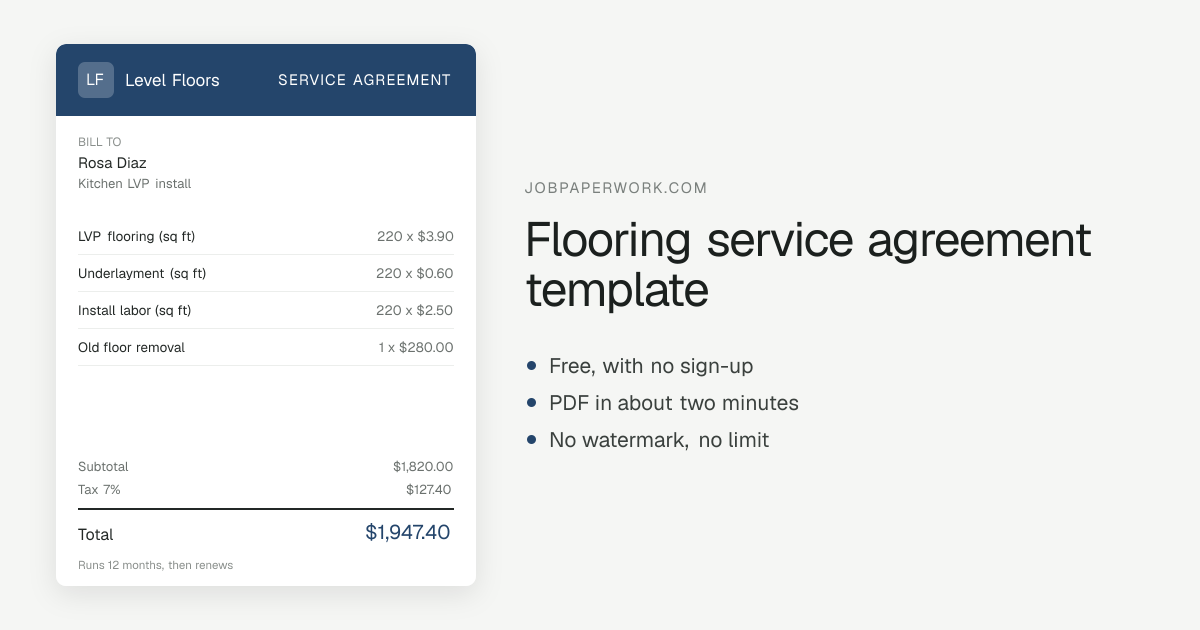
A PDF, and a link your customer can open in any browser. Word and Excel versions are not available yet — if a spreadsheet is what you need, this is not yet the tool for it, and saying so is cheaper for both of us than you finding out after typing everything in.
Pick how it looks
Six looks, from a plain classic sheet through a bold top band to a shop ticket, and your initials go on automatically until you upload a logo. See all six.
How to send it
Most customers want the paper on their phone, so the service agreement goes out by WhatsApp, text or email, or as a link that needs no app and no account on their side. Or download the PDF to print it or keep it for your own records.
Questions
Does flooring really need a service agreement?
Domestic, no. Commercial safety flooring, often yes — the slip resistance it was specified for degrades under the wrong cleaning regime, and a kitchen floor scrubbed with the wrong product for two years is a liability rather than a floor.
What does re-dressing involve?
Stripping the old finish and applying a new one, which restores the appearance and the slip resistance together. On commercial vinyl it is the difference between a floor lasting five years and fifteen, and most building managers do not know it is a thing until somebody tells them.