

What goes on a carpentry service agreement
Rare in carpentry, and worth being honest about. Where it fits is a rental portfolio or a managed building that needs a carpenter on call — doors that stop closing, windows that stick, a handrail working loose. It is a call-off arrangement rather than scheduled work, and the agreement should read like one.
- The properties or the building covered
- What kind of work falls inside it — repairs and adjustments, not installations
- The call-out rate and the hourly rate, fixed for the term
- Response times, and what counts as urgent
- A minimum charge per visit, which matters when the job is a sticking door
- Materials: whether you supply and bill on, or they do
- The term, how it renews, and the notice to end it
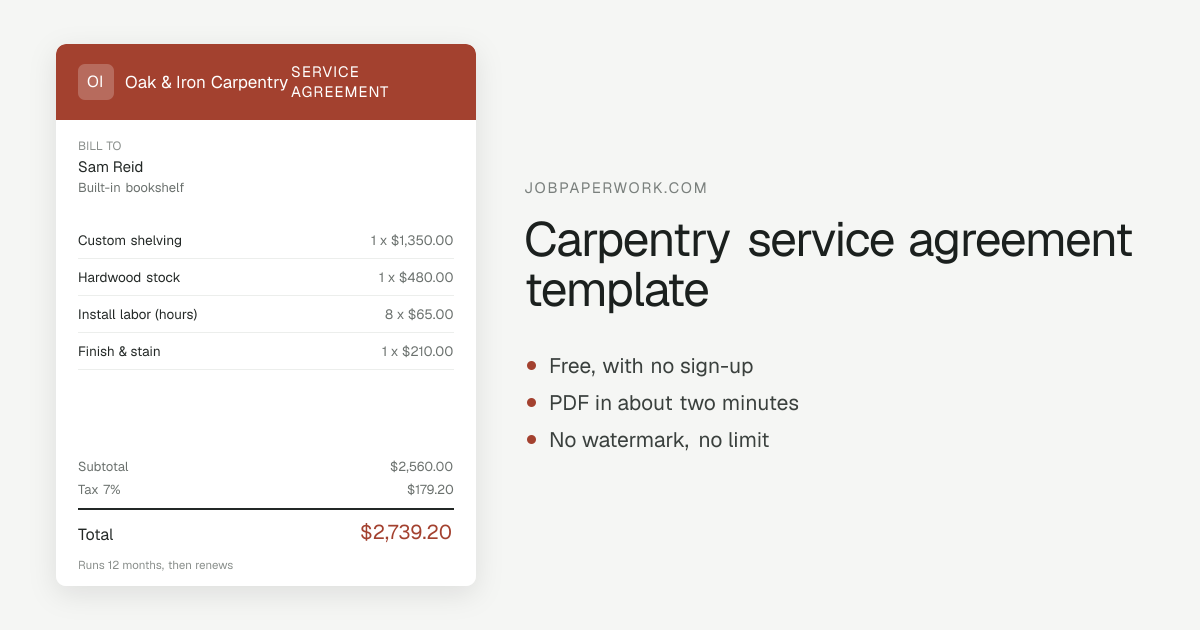
The sample line items and example prices this sheet opens with are on the carpentry invoice template — the same table, which is about the trade rather than about this paper, so it lives in one place rather than on all six.
What you get
A PDF, and a link your customer can open in any browser. Word and Excel versions are not available yet — if a spreadsheet is what you need, this is not yet the tool for it, and saying so is cheaper for both of us than you finding out after typing everything in.
Pick how it looks
Six looks, from a plain classic sheet through a bold top band to a shop ticket, and your initials go on automatically until you upload a logo. See all six.
How to send it
Most customers want the paper on their phone, so the service agreement goes out by WhatsApp, text or email, or as a link that needs no app and no account on their side. Or download the PDF to print it or keep it for your own records.
Questions
Is a service agreement worth it for a carpenter?
Only where there is a portfolio behind it. One property does not generate enough small work to justify the paperwork; twenty apartments generate a steady drip of doors, locks and windows, and the agreement is what stops each one being negotiated from scratch.
How do I avoid losing money on tiny jobs?
A minimum charge per visit, named in the agreement. A door adjustment is fifteen minutes of work and an hour of driving, and without a minimum you are funding the travel. Agents accept it readily in an agreement and resist it entirely when it turns up on an invoice.