

What goes on a pressure washing work order
The work order on a pressure washing job is a damage-prevention list. The machine will destroy anything soft, and most of what it can destroy — a vent, a seal, a bedding joint, a planting bed — is something the customer never thought to mention.
- The site, the date, and the hours you are allowed to work
- The surfaces in scope, in order
- What must not be hit: vents, seals, lights, paintwork, planting
- Pressure and nozzle for each surface, where they differ
- Water source, power source, and where the run-off goes
- What has to be moved, and by whom
- Sign-off, with before and after photographs
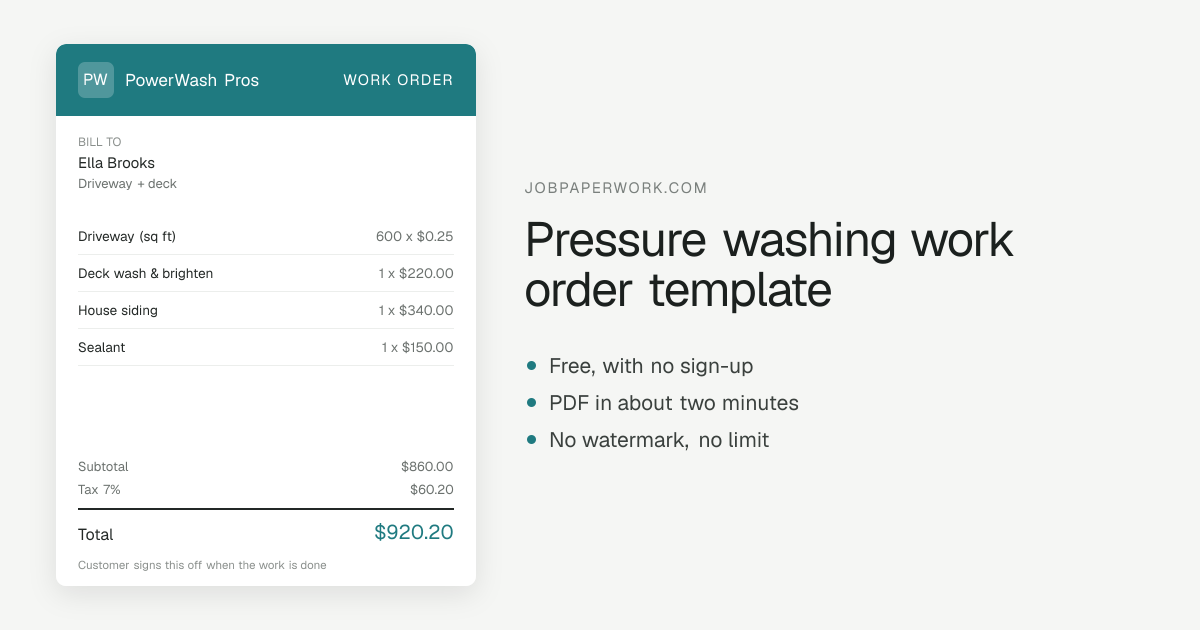
The sample line items and example prices this sheet opens with are on the pressure washing invoice template — the same table, which is about the trade rather than about this paper, so it lives in one place rather than on all six.
What you get
A PDF, and a link your customer can open in any browser. Word and Excel versions are not available yet — if a spreadsheet is what you need, this is not yet the tool for it, and saying so is cheaper for both of us than you finding out after typing everything in.
Pick how it looks
Six looks, from a plain classic sheet through a bold top band to a shop ticket, and your initials go on automatically until you upload a logo. See all six.
How to send it
Most customers want the paper on their phone, so the work order goes out by WhatsApp, text or email, or as a link that needs no app and no account on their side. Or download the PDF to print it or keep it for your own records.
Questions
Why record the pressure and the nozzle?
Because the same machine that cleans concrete will strip render, and whoever does the next visit may not be you. Writing down what was used on each surface makes the job repeatable, and stops the one expensive mistake this trade is capable of.
Are before-and-after photographs worth taking?
They are the best marketing this trade has and the best protection. The customer sees the difference properly for the first time, and if anything is later said to have been damaged, the before shot is usually the whole answer.