

What goes on a landscaping work order
A round is run off a sheet, and the sheet is what makes a crew self-sufficient. Which properties, in which order, what gets done at each — and the details that waste the most time when they are missing: the gate code, the dog, where the bins live, whose parking space is not theirs.
- The properties in the order they will be worked, with addresses
- The tasks at each, since not every property gets everything every visit
- Access: gate codes, keys, dogs, and where to park
- What the crew is carrying, and anything being collected on the way
- Waste: what is being taken and where it is being tipped
- Anything the customer has asked for on this visit specifically
- Who on the crew is responsible for the sheet coming back
The sample line items and example prices this sheet opens with are on the landscaping invoice template — the same table, which is about the trade rather than about this paper, so it lives in one place rather than on all six.
What you get
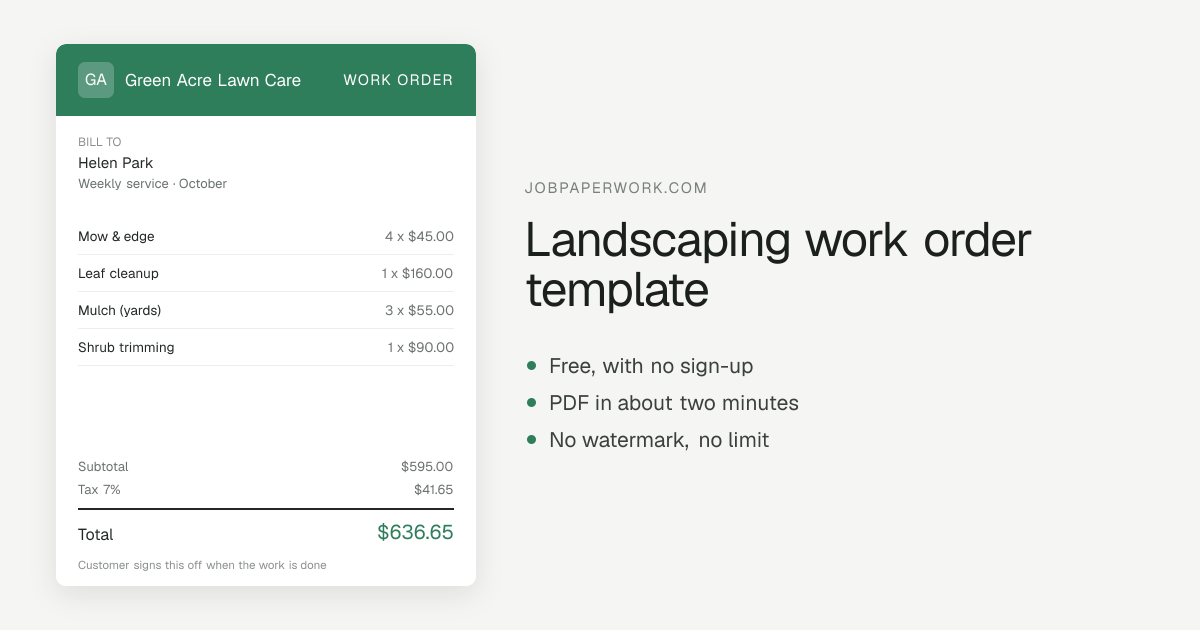
A PDF, and a link your customer can open in any browser. Word and Excel versions are not available yet — if a spreadsheet is what you need, this is not yet the tool for it, and saying so is cheaper for both of us than you finding out after typing everything in.
Pick how it looks
Six looks, from a plain classic sheet through a bold top band to a shop ticket, and your initials go on automatically until you upload a logo. See all six.
How to send it
Most customers want the paper on their phone, so the work order goes out by WhatsApp, text or email, or as a link that needs no app and no account on their side. Or download the PDF to print it or keep it for your own records.
Questions
Why does a regular round need a work order?
Because the crew changes and the knowledge does not travel with them. The gate code, the dog, the bed that is not to be cut back — all of it lives in one person’s head until it is written down, and the day that person is off is the day a customer rings.
What should come back at the end of the day?
The sheet, with anything noted the customer ought to know: a fence panel down, a tree that needs work, a bed that is failing. Those notes are next quarter’s extra work, and they are lost entirely if nobody has anywhere to write them.