

What goes on a construction work order
Every build changes, and the variation is where the money is won or lost. A work order is the paper that turns “while you’re here, could you” into priced, approved work, and the whole value of it is in the timing. Signed before the work, it is a variation. Raised afterwards, it is a request to be paid for something nobody agreed to.
- The contract it varies, and the date
- What is being added, removed or changed, described in the contract’s own terms
- Who requested it, which matters when the client is not one person
- The cost: a fixed figure, or the rate and the basis for it
- The effect on the program, in days
- Anything it knocks out of the original scope, credited back
- A signature and date from whoever can actually authorize it
The sample line items and example prices this sheet opens with are on the construction invoice template — the same table, which is about the trade rather than about this paper, so it lives in one place rather than on all six.
What you get
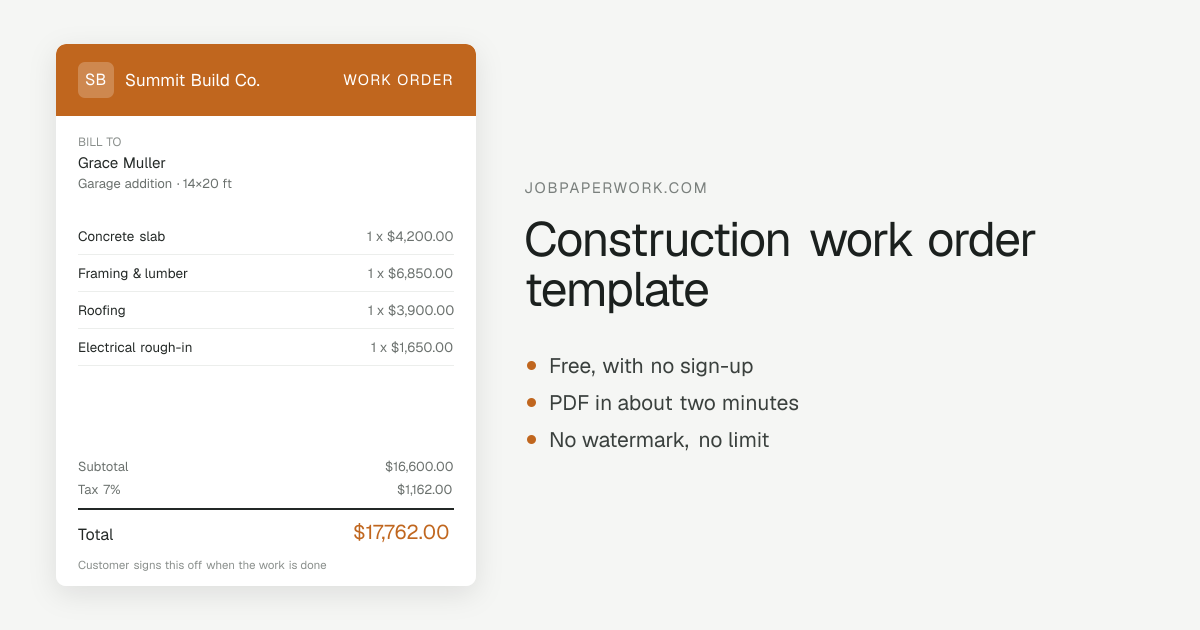
A PDF, and a link your customer can open in any browser. Word and Excel versions are not available yet — if a spreadsheet is what you need, this is not yet the tool for it, and saying so is cheaper for both of us than you finding out after typing everything in.
Pick how it looks
Six looks, from a plain classic sheet through a bold top band to a shop ticket, and your initials go on automatically until you upload a logo. See all six.
How to send it
Most customers want the paper on their phone, so the work order goes out by WhatsApp, text or email, or as a link that needs no app and no account on their side. Or download the PDF to print it or keep it for your own records.
Questions
Who has to sign a variation?
Whoever can commit the money, which is not always whoever is on site. On domestic work that is usually straightforward; on commercial it is not, and a variation signed by a site contact with no authority is one you may end up funding. Establish the name at contract stage.
What if the client asks for something verbally and wants it now?
Do it if you can, and write the variation the same day with the time and the name of who asked. A same-day note is evidence; a note written when the invoice is queried is a position. Better still is a photo of the signed sheet before anyone picks up a tool.