

What goes on an electrical work order
The work order is what the electrician on site is actually holding, and what it carries is different from anything on the invoice: which circuits, where the isolation is, and who is responsible for the supply being dead. That last one is not administration. It is the reason the sheet exists.
- The property, the area, and the circuits in scope
- What is being isolated, where the isolation point is, and who locked it off
- The permit to work, where the site requires one
- The work authorized, task by task
- Materials to be drawn, and who is supplying them
- Testing required at the end, and what gets recorded
- Sign-off, and who may re-energise
The sample line items and example prices this sheet opens with are on the electrical invoice template — the same table, which is about the trade rather than about this paper, so it lives in one place rather than on all six.
What you get
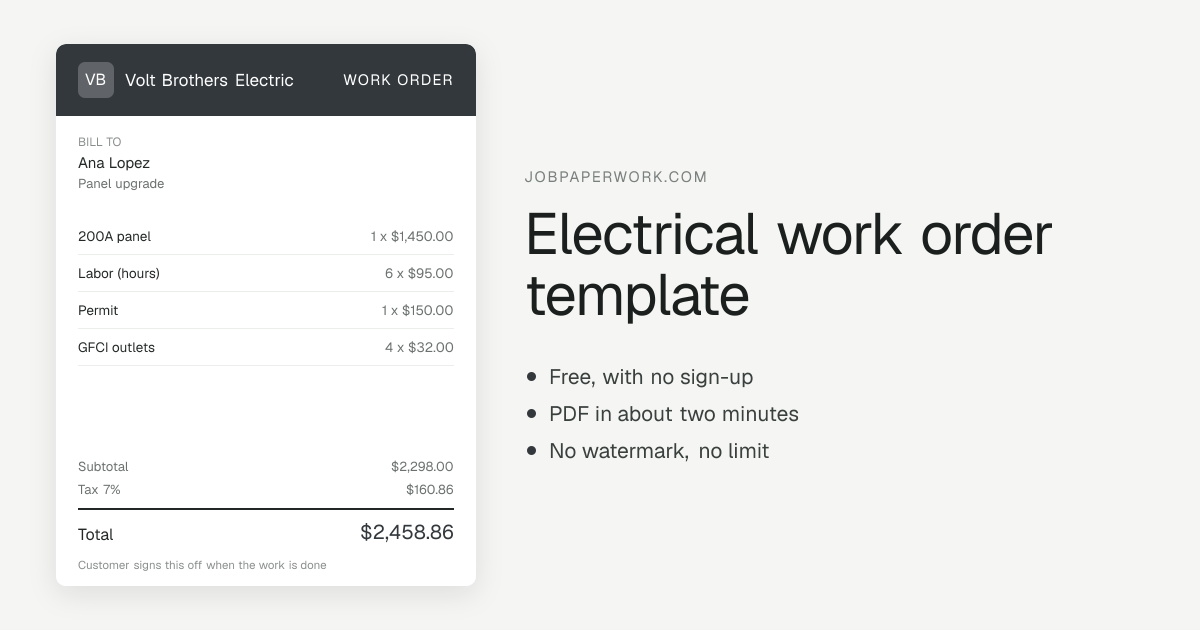
A PDF, and a link your customer can open in any browser. Word and Excel versions are not available yet — if a spreadsheet is what you need, this is not yet the tool for it, and saying so is cheaper for both of us than you finding out after typing everything in.
Pick how it looks
Six looks, from a plain classic sheet through a bold top band to a shop ticket, and your initials go on automatically until you upload a logo. See all six.
How to send it
Most customers want the paper on their phone, so the work order goes out by WhatsApp, text or email, or as a link that needs no app and no account on their side. Or download the PDF to print it or keep it for your own records.
Questions
Why does the work order need the isolation point on it?
Because whoever isolated it may not be whoever turns up to finish. Writing down what was isolated, where, and who locked it off is the difference between a safe re-energise and an assumption — and assumptions are what the paperwork exists to remove.
Is this different from a permit to work?
On a commercial site, yes. The permit is the site’s document and governs whether you may start; the work order is yours and governs what you are doing. On domestic work there is usually no permit and the work order carries both.