

What goes on a plumbing work order
Work orders in plumbing come from property managers and property managers, and they exist because the person who wants the work done is almost never the person who will be standing there. Access, isolation and the tenant are what the sheet has to settle, because those are what turn a one-hour job into a wasted morning.
- The property, the unit, and the tenant’s name and number
- What was reported, and by whom — tenant, agent or owner
- Access: who holds the key, whether the tenant will be in, where to park
- What has to be isolated, and whether anyone has found the stopcock
- The work authorized, and the spend limit above which you must ring
- What the tenant has to clear or move first
- Sign-off: who checks it, and what happens if nobody is there
The sample line items and example prices this sheet opens with are on the plumbing invoice template — the same table, which is about the trade rather than about this paper, so it lives in one place rather than on all six.
What you get
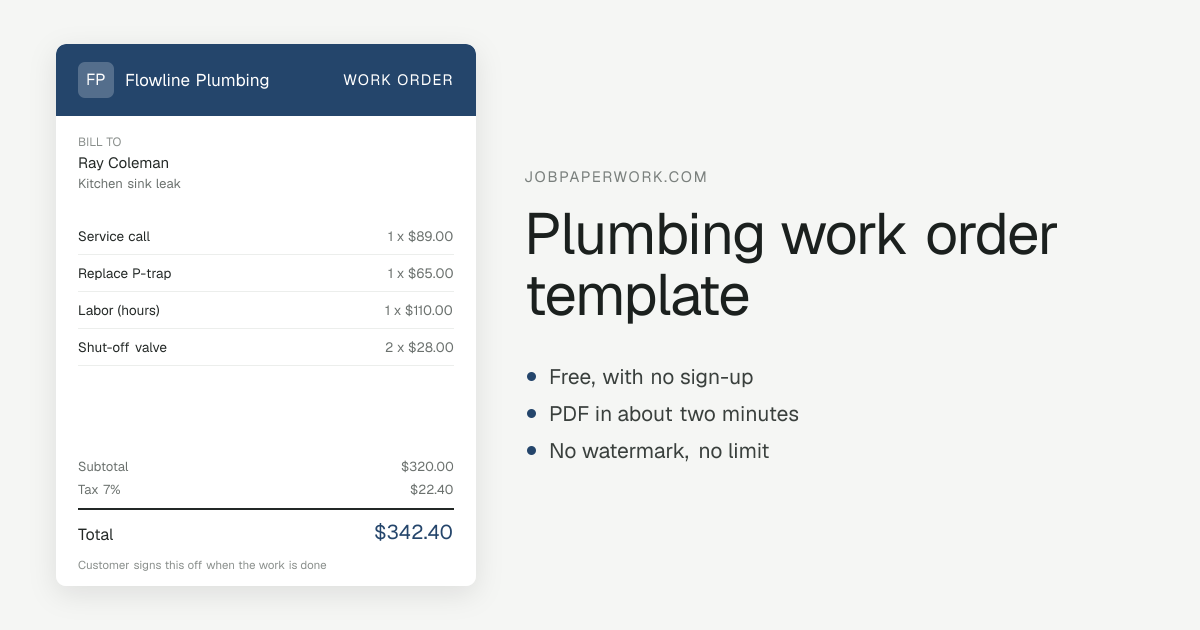
A PDF, and a link your customer can open in any browser. Word and Excel versions are not available yet — if a spreadsheet is what you need, this is not yet the tool for it, and saying so is cheaper for both of us than you finding out after typing everything in.
Pick how it looks
Six looks, from a plain classic sheet through a bold top band to a shop ticket, and your initials go on automatically until you upload a logo. See all six.
How to send it
Most customers want the paper on their phone, so the work order goes out by WhatsApp, text or email, or as a link that needs no app and no account on their side. Or download the PDF to print it or keep it for your own records.
Questions
Who signs off a job when the tenant is not the customer?
Get the tenant to sign that the work was done and the agent to authorize what it cost. They are two different things, and conflating them is how an agent ends up disputing work the tenant already confirmed. The sheet wants a line for each.
What if I cannot get access?
Record it on the sheet with the time you arrived and how long you waited, and charge the wasted visit if your terms allow it. Access failures are the single biggest hidden cost in property work, and an agent who sees them logged starts arranging access properly.