

What goes on a plumbing receipt
Plumbing is paid at the door more than almost any trade, because the job is finished the moment the leak stops and that is the moment it is worth most. A receipt handed over there and then ends the transaction. One posted next week starts a conversation about whether it was ever paid.
- The date paid, and the address the work was done at
- What was done, briefly — the fault and the fix
- Parts fitted, with the fixture make where you supplied one
- Labor and the call-out, still shown separately
- How it was paid: cash, card or transfer
- Any warranty on the work, and when it runs out
- Paid in full, or the balance left if it was a part payment
The sample line items and example prices this sheet opens with are on the plumbing invoice template — the same table, which is about the trade rather than about this paper, so it lives in one place rather than on all six.
What you get
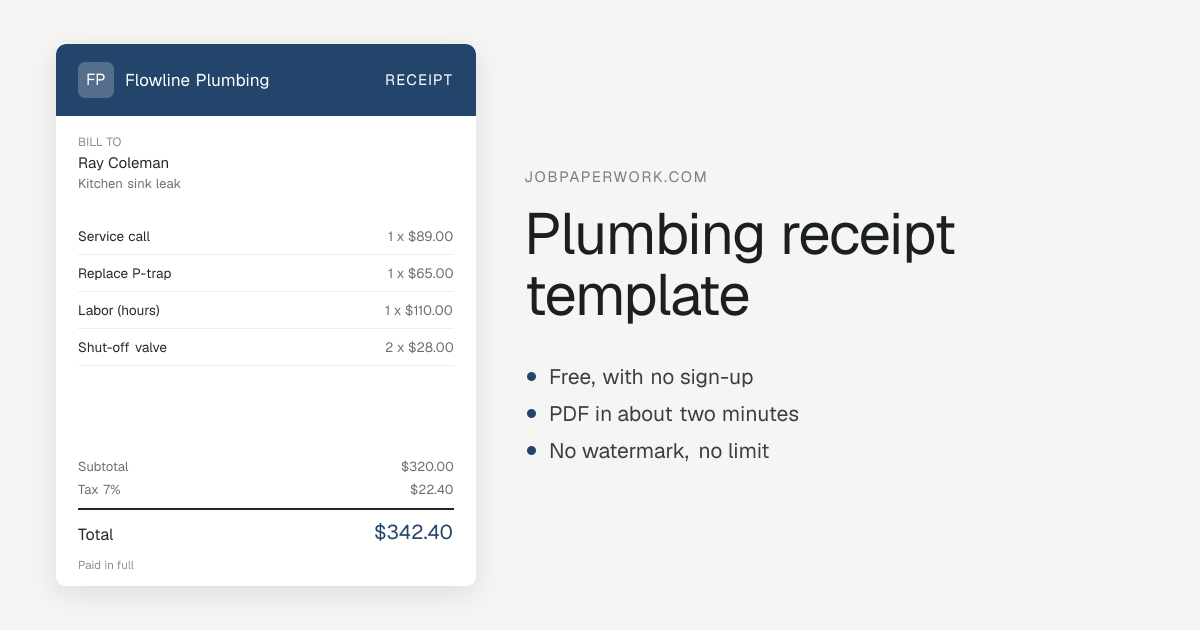
A PDF, and a link your customer can open in any browser. Word and Excel versions are not available yet — if a spreadsheet is what you need, this is not yet the tool for it, and saying so is cheaper for both of us than you finding out after typing everything in.
Pick how it looks
Six looks, from a plain classic sheet through a bold top band to a shop ticket, and your initials go on automatically until you upload a logo. See all six.
How to send it
Most customers want the paper on their phone, so the receipt goes out by WhatsApp, text or email, or as a link that needs no app and no account on their side. Or download the PDF to print it or keep it for your own records.
Questions
What should a plumbing receipt say about the fault?
One line on what you found and one on what you did, because the two often differ. A receipt that says “replaced P-trap” and nothing about the corroded waste it was bolted to gives you nothing when the same customer rings about a different leak in the same run three months later.
Does the receipt need the warranty on it?
It is the best place for it. Customers keep receipts and lose everything else, so a line saying what is covered and for how long is far more likely to be found in eighteen months than a separate certificate. It also stops a claim on something you never warranted.