

What goes on a handyman work order
The task list is the work order, which makes this the trade where the two documents are the same thing. Where it earns its place is agency and landlord work: somebody is sending you to a property with a list written by someone else, and the sheet is the only thing connecting what was reported to what you found.
- The property, the tenant, and the access arrangements
- What was reported, and by whom
- The jobs authorized, with the spend limit on each or in total
- What to do if a job turns out bigger — ring, or proceed to a limit
- Parts you are expected to carry, and what will be waiting on site
- What is specifically not authorized
- Sign-off: the tenant for the work, the agent for the cost
The sample line items and example prices this sheet opens with are on the handyman invoice template — the same table, which is about the trade rather than about this paper, so it lives in one place rather than on all six.
What you get
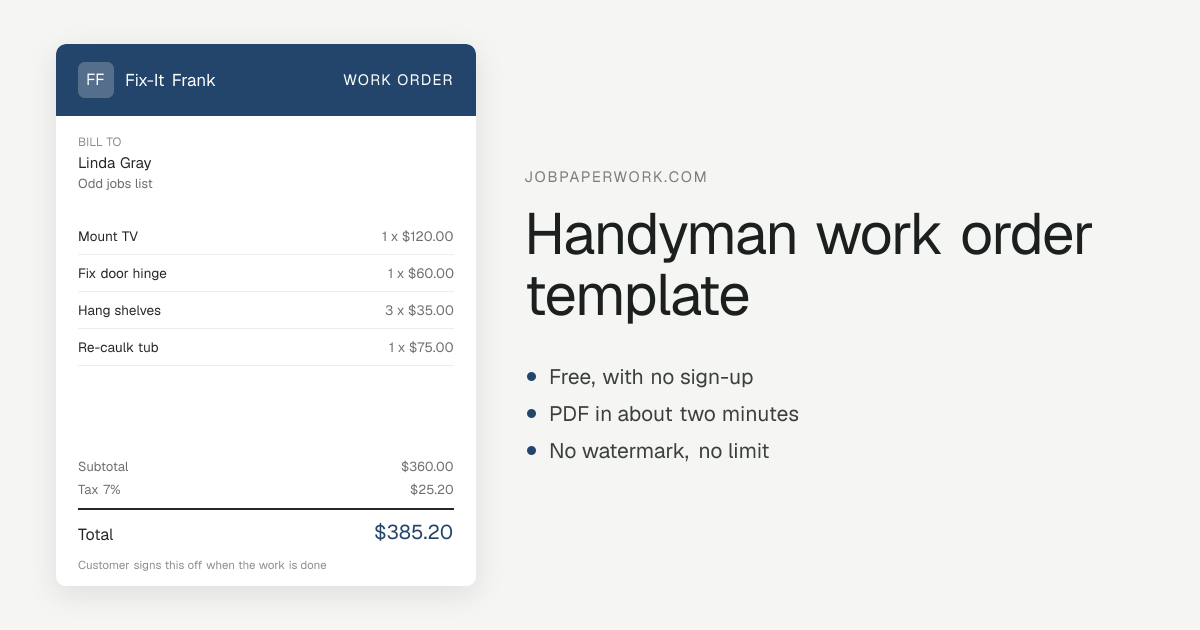
A PDF, and a link your customer can open in any browser. Word and Excel versions are not available yet — if a spreadsheet is what you need, this is not yet the tool for it, and saying so is cheaper for both of us than you finding out after typing everything in.
Pick how it looks
Six looks, from a plain classic sheet through a bold top band to a shop ticket, and your initials go on automatically until you upload a logo. See all six.
How to send it
Most customers want the paper on their phone, so the work order goes out by WhatsApp, text or email, or as a link that needs no app and no account on their side. Or download the PDF to print it or keep it for your own records.
Questions
What should the spend limit be on an agency job?
Whatever it is, get it in writing before you go. Agencies routinely send a list with no figure attached and then query the invoice, and the fix is one line on the sheet: authorized up to this amount, ring above it. It takes a minute and removes the argument entirely.
What if I find something that was not reported?
Note it, do not fix it, and tell the agent. An unreported fault found on a visit is work you were not authorized for, and doing it as a favor sets the expectation. Written on the sheet, it is next week’s booking.