

What goes on a handyman quote
A quote fits where the job is defined even though it is small — a fence run, a flat-pack kitchen, a door and frame. Size does not decide which paper to use; whether you can see the whole thing does. A fixed price on something small is also easier to sell than an hourly rate nobody can put a bound on.
- The job, described so it cannot be read two ways
- Materials by name and quantity, and who is buying them
- The fixed price, labor included
- What is not included — patching and repair, disposal, painting afterwards
- How long it will take, and whether it is one visit or two
- What the price assumes about what is already there
- How long it stands, and a line to sign
The sample line items and example prices this sheet opens with are on the handyman invoice template — the same table, which is about the trade rather than about this paper, so it lives in one place rather than on all six. Working out the price itself? The markup calculator turns your cost and markup into the figure to put on the quote, and shows the margin it leaves.
What you get
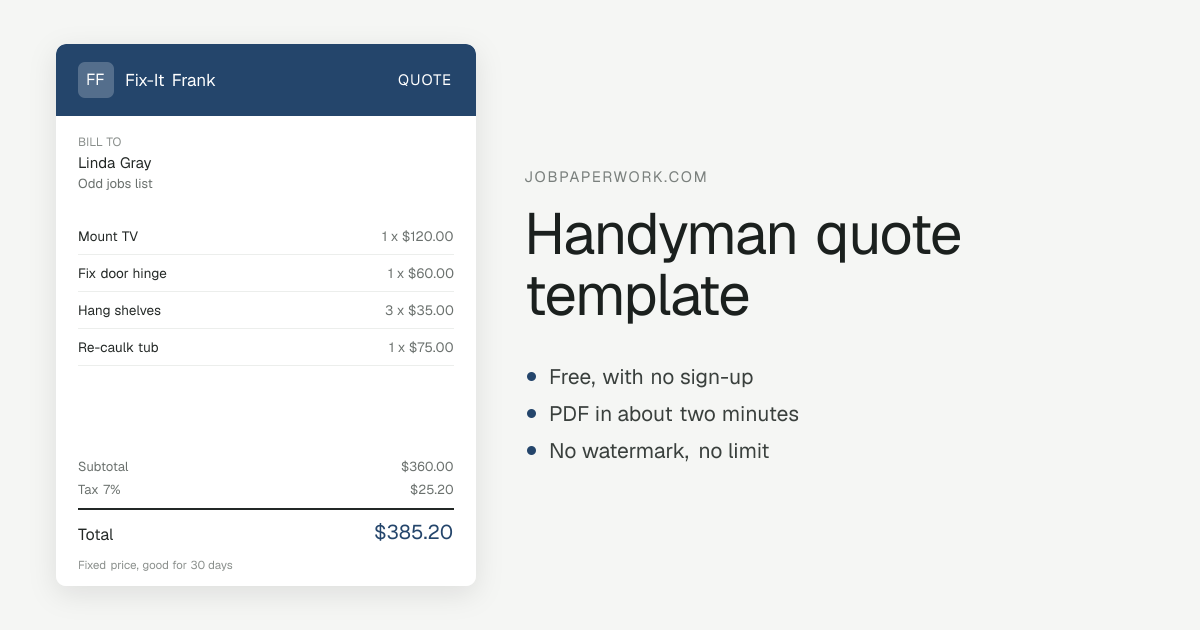
A PDF, and a link your customer can open in any browser. Word and Excel versions are not available yet — if a spreadsheet is what you need, this is not yet the tool for it, and saying so is cheaper for both of us than you finding out after typing everything in.
Pick how it looks
Six looks, from a plain classic sheet through a bold top band to a shop ticket, and your initials go on automatically until you upload a logo. See all six.
How to send it
Most customers want the paper on their phone, so the quote goes out by WhatsApp, text or email, or as a link that needs no app and no account on their side. Or download the PDF to print it or keep it for your own records.
Questions
When should a small job be quoted rather than charged by the hour?
When you can see all of it. Customers are far more comfortable with a fixed price on a defined job than with an hourly rate, because what they fear is an open meter. If you can bound the job, quoting it will win you more work than your rate will.
What if the job takes longer than I quoted?
That is what quoting means, and it is why the assumptions line matters. Quote what you can see and name the conditions — the wall is sound, the existing fittings come out, there is nothing behind it. Within those, the price is yours to get right.