

What is a proforma invoice?
A proforma invoice is a preliminary bill sent before the work is done or goods are shipped. It previews what will be charged so the buyer can agree or pay a deposit, but it is not a demand for payment and is not recorded as a sale. The real invoice follows afterward.
“Proforma” is Latin for “as a matter of form”, and that is exactly what a proforma invoice is: a document shaped like an invoice but issued before there is anything to actually bill for. It sits between a quote and a real invoice, and knowing which of the three you are sending keeps you from asking for money you have not earned yet — or recording a sale that has not happened.
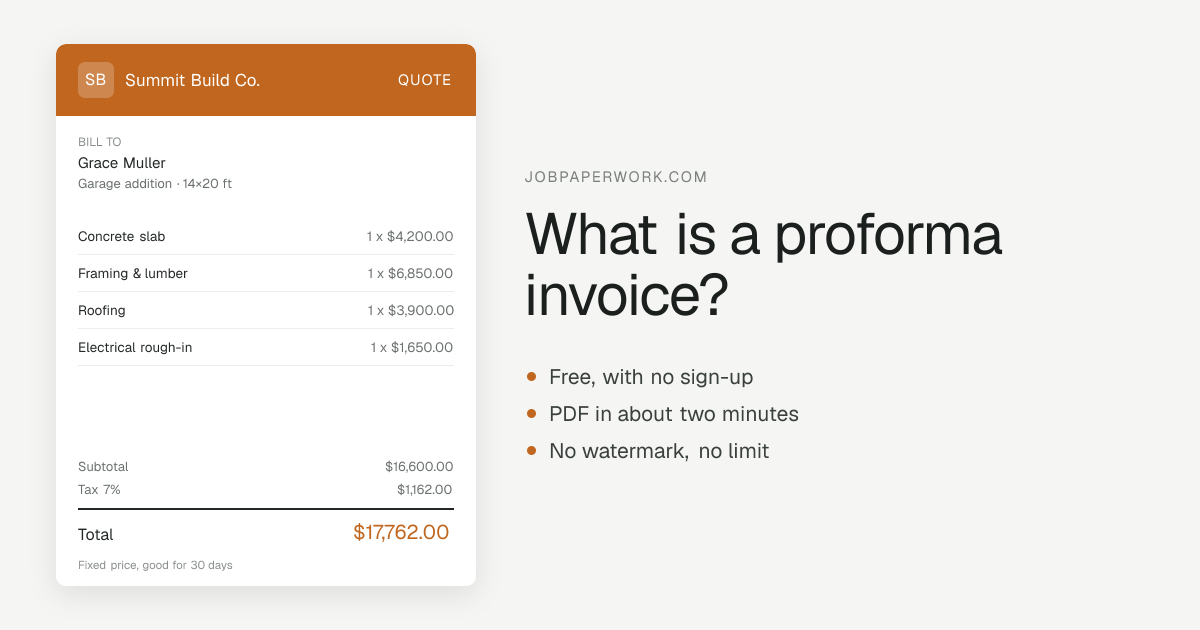
A bill in advance, not a bill
A proforma invoice lays out what a job or an order will cost — the lines, the quantities, the total — and sends it to the customer before the work is done or before they pay. It looks like an invoice on purpose, so the customer can see exactly what they are agreeing to and get an internal approval or a payment arranged.
What it is not is a request for payment that goes in your accounts. Because no work has been delivered, a proforma does not create a debt, is not entered as revenue, and is not the document you would take to court over an unpaid balance. That role belongs to the final invoice.
Proforma invoice vs quote
A quote and a proforma invoice do a similar job — both say "here is the price before you commit" — but they are pitched differently. A quote is an offer: it invites the customer to say yes. A proforma is closer to a confirmed order written up as a bill: the price is settled and the document exists so payment or approval can be arranged against it.
In practice a small trade business often does not need both. If you have already agreed the price and the customer simply needs something to pay a deposit against, a proforma is the cleaner document; if you are still competing for the work, a quote is. There is more on the quote side of this in the estimate-versus-quote guide.
Proforma invoice vs the final invoice
The final invoice is the one that counts. It is issued after the work, carries a real invoice number in your sequence, records a sale, and starts the payment clock. The proforma that came before it is a preview and usually carries no invoice number at all (or a clearly marked "proforma" reference) so it never gets mistaken for the real one.
The usual flow is: agree the price, send a proforma so the customer can approve or pay a deposit, do the work, then issue the final invoice for the balance. The totals should match unless the job changed — and if it changed, the final invoice is where that is reflected.
When a trade business actually uses one
Most domestic trade work never needs a proforma — you quote, you do the job, you invoice. Where it earns its place is when money has to move before the work does: a deposit on a large job, materials you will not order until the customer has paid their share, or a commercial client whose accounts department will not release funds without a document that looks like a bill.
It is also the standard document for shipping goods across a border, where customs uses the proforma to assess duty before a commercial invoice exists. If you ever send equipment or parts internationally, that is the context the term most often comes up in.
What goes on a proforma invoice
Almost everything a normal invoice shows, with two differences: it is clearly labelled "Proforma invoice", and it does not use a number from your live invoice sequence.
- The heading "Proforma invoice", unmistakably
- Your business details and the customer’s
- The date, and a validity period if the price could change
- Each line of work or goods, with quantities and prices
- The subtotal, any expected tax, and the total
- How and by when you would like the deposit or payment made
Does it include tax, and can the customer pay it?
A proforma normally shows the tax that will apply so the total is honest, but because no sale has happened, that tax is an estimate of what the final invoice will charge rather than a tax document in its own right. For anything to do with reclaiming or reporting that tax, the final invoice is the one that matters — check your tax authority for what they will and will not accept a proforma for.
A customer can absolutely pay against a proforma — that is often the whole point, especially for a deposit. When they do, you still issue a final invoice afterward and show the deposit already paid, so the record is complete.
Turning a proforma into the real thing
Because the two documents are nearly identical, the final invoice is usually the proforma with three changes: a real invoice number, the issue date moved to when the work finished, and any deposit already paid deducted from the total. Keep the proforma on file either way — if a deposit dispute ever comes up, it is the document that shows what the customer agreed to before the work started.
Official sources
This guide explains how the rules usually work; these are the bodies that actually decide them where you are. Check them before you rely on anything above.
Last checked 6 November 2026. This is general information, not tax or legal advice.
Questions
Is a proforma invoice legally binding?
Generally no — it is a preview of what you intend to charge, not a contract or a demand for payment. What binds the job is the agreement behind it and, afterward, the final invoice. Treat the proforma as a good-faith statement of the price, not a debt.
Can you pay a proforma invoice?
Yes. Customers often pay a deposit, or the whole amount, against a proforma — especially before materials are ordered. You then issue a final invoice afterward showing the payment already made.
Does a proforma invoice have an invoice number?
It should not use a number from your live invoice sequence, because that sequence is meant to be gap-free and for real sales only. Label it “Proforma” and give it its own reference if you need one; the real invoice number is assigned later.
Does a proforma invoice include tax?
It usually shows the tax that will apply so the total is realistic, but that figure is an estimate until the final invoice is issued. For reporting or reclaiming tax, the final invoice is the valid document — confirm with your tax authority.
Is a proforma invoice the same as a quote?
They overlap but differ in tone. A quote is an offer that invites a yes; a proforma is closer to a confirmed order written up as a bill so payment can be arranged. If the price is still being decided, send a quote.