

Estimate, quote or invoice: which to send
Send an estimate when you are giving a best guess that can still move, a quote when you are committing to a fixed price the customer can hold you to, and an invoice once the work is done and you want paying. Proof you were already paid is a receipt.
These three get used as if they were the same paper with different headings, and they are not. The difference is not formatting — it is how much you are on the hook for once the customer has it in their hand. Send the wrong one and you have either frightened a customer off or agreed to a price you cannot hold.
The one difference that matters
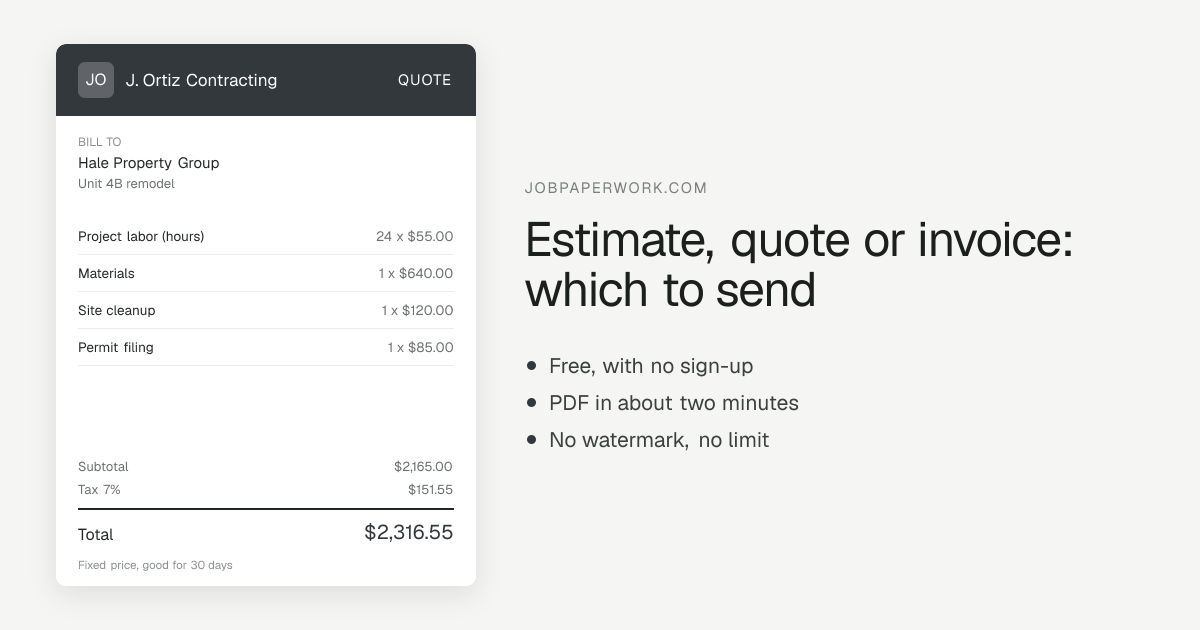
Strip away the layout and the three papers are three different promises. An estimate is your best guess before the work starts, and it can move. A quote is a fixed price you are committing to, and it cannot — once accepted, anything you left out is work you have agreed to do for nothing. An invoice is neither a guess nor a promise: it is the demand for money after the work is done.
So the question is never "which looks more professional". It is "how certain am I, and has the work happened yet". That answers it every time.
Which one to send
Run the job through these and the paper picks itself:
- Not sure of the final figure, and want to give a ballpark? That is an estimate.
- Sure of the figure and willing to stand behind it? That is a quote.
- Customer wants a price they can hold you to before they commit? Quote, not estimate.
- Work is done and you want paying? Invoice.
- Already been paid and need to prove it? That is a receipt, not any of these three.
How the papers follow each other on one job
On a job of any size they are not alternatives — they are a sequence, and each one carries the last one forward. A quote sets the price. A work order records what was agreed and gets signed before anyone starts. The invoice bills what the work orders actually came to. The receipt proves the invoice was paid. Every step references the one before it, which is what makes the job defensible if it is ever questioned.
A small job skips most of this and goes straight to an invoice. The point is not to make more paperwork; it is to know which paper the job is actually asking for.
What changes on the page
An estimate and a quote both price work that has not happened, so both carry a date the price is good until and a line to accept. The difference the paper should make obvious is the word itself and the wording around it: an estimate says "approximate" and a quote says "fixed". An invoice drops the acceptance line and gains a due date and how to pay. Getting the label right matters more than getting the layout pretty.
Doing it here
JobPaperwork makes all three from the same sheet — pick the paper at the top and the heading, the dates and the sign-off change with it. The usual jobs and prices for your trade are filled in either way, so turning an estimate into the final invoice is changing one setting rather than retyping the job.
Questions
Is a quote legally binding and an estimate not?
In practice a quote is treated as an offer of a fixed price and an estimate as a good-faith approximation, but how far either binds you depends on your wording and your state. Say plainly on the paper which one it is, and if a job is large enough for the answer to matter, have someone local check your terms.
Can I charge more than my estimate?
Usually yes, within reason and if you tell the customer before you run past it — that is the whole point of the word "estimate". The way to keep that right is to flag the overrun as it happens, not to surprise them with it on the invoice.
Do I need all four papers on every job?
No. A quick repair is one invoice. The sequence — quote, work order, invoice, receipt — earns its keep on bigger jobs, disputes, and anything a customer might later question. Use the paper the job actually needs.