

What goes on a pressure washing quote
Commercial frontages and fleet work get quoted, because the buyer wants one figure per visit and will be comparing it. The work is repeatable, so the risk is not the first clean but the state of the surface: a frontage untouched for five years is a different job from the one after it.
- The site, the surfaces, and the measured area of each
- The first clean priced separately from the ones that follow, where it differs
- The frequency, where it is a recurring quote
- What is included: the wash, the treatment, the rinse-down of surrounds
- The hours it will be done in, which on a shopfront is the whole constraint
- Waste water: where it goes, and who is responsible for the run-off
- The fixed price, the term, and both signatures
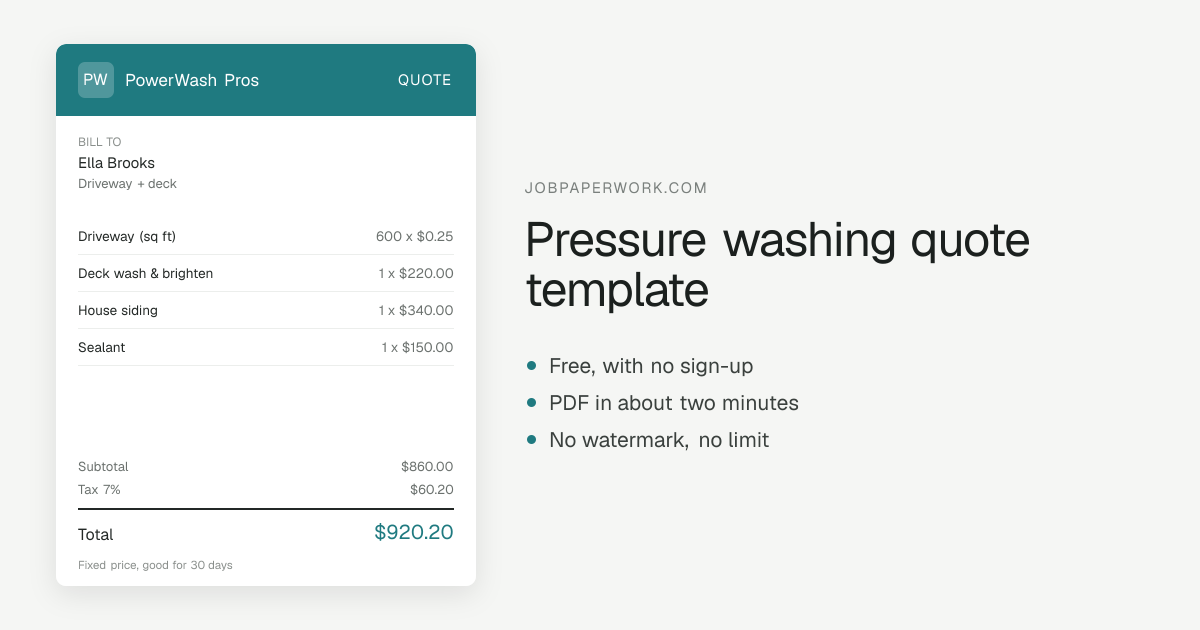
The sample line items and example prices this sheet opens with are on the pressure washing invoice template — the same table, which is about the trade rather than about this paper, so it lives in one place rather than on all six. Working out the price itself? The markup calculator turns your cost and markup into the figure to put on the quote, and shows the margin it leaves.
What you get
A PDF, and a link your customer can open in any browser. Word and Excel versions are not available yet — if a spreadsheet is what you need, this is not yet the tool for it, and saying so is cheaper for both of us than you finding out after typing everything in.
Pick how it looks
Six looks, from a plain classic sheet through a bold top band to a shop ticket, and your initials go on automatically until you upload a logo. See all six.
How to send it
Most customers want the paper on their phone, so the quote goes out by WhatsApp, text or email, or as a link that needs no app and no account on their side. Or download the PDF to print it or keep it for your own records.
Questions
Should the first clean be priced differently?
Nearly always, and it is the commonest mistake in commercial quoting. A frontage with five years of dirt on it can take three times as long as the quarterly visit after it, and one rate for both means losing money on the first and over-charging forever after.
Who is responsible for the run-off?
Say so in the quote. Washing a commercial forecourt can put detergent and hydrocarbons into a surface drain, and on a site with an environmental permit that matters a great deal. Naming who handles it tells a commercial buyer you have done this before.