

What goes on a roofing receipt
Roofing takes large deposits, because the material is most of the cost and it is ordered before anybody climbs. That makes the deposit receipt the most important paper on the job — it is the only thing the customer holds between handing over several thousand dollars and seeing a truck arrive.
- The date paid, the amount, and what stage it releases
- What the deposit is buying: the material, by quantity and type
- The expected delivery or start date
- The balance remaining, and when it falls due
- The property and the contract reference
- How it was paid
- The warranty start date, which is completion rather than payment
The sample line items and example prices this sheet opens with are on the roofing invoice template — the same table, which is about the trade rather than about this paper, so it lives in one place rather than on all six.
What you get
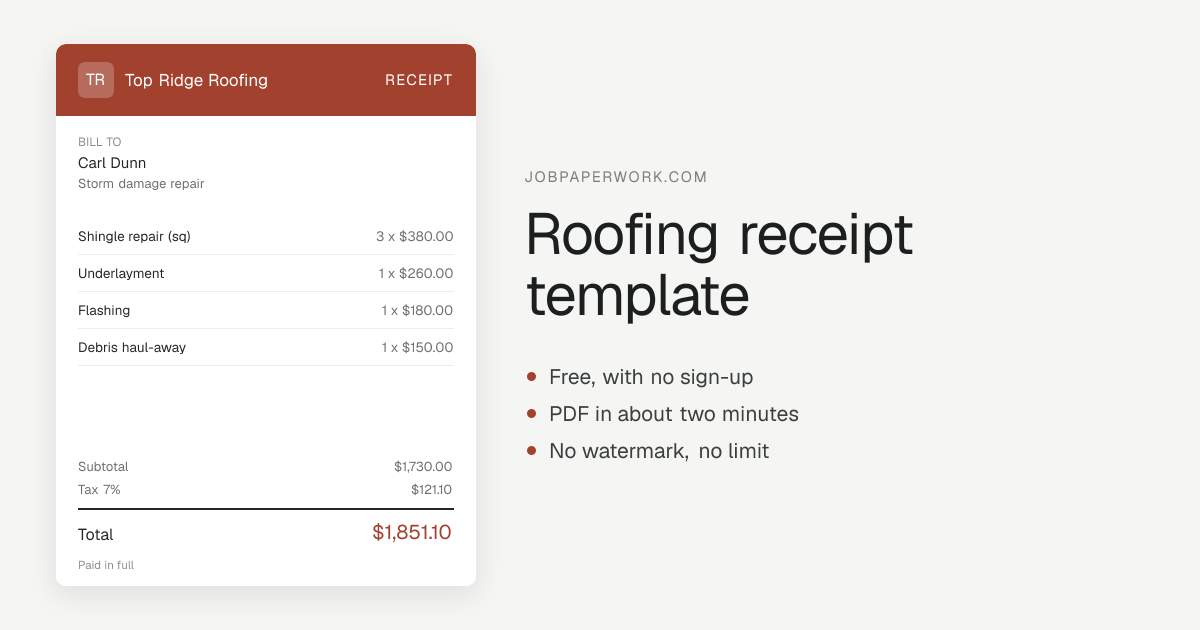
A PDF, and a link your customer can open in any browser. Word and Excel versions are not available yet — if a spreadsheet is what you need, this is not yet the tool for it, and saying so is cheaper for both of us than you finding out after typing everything in.
Pick how it looks
Six looks, from a plain classic sheet through a bold top band to a shop ticket, and your initials go on automatically until you upload a logo. See all six.
How to send it
Most customers want the paper on their phone, so the receipt goes out by WhatsApp, text or email, or as a link that needs no app and no account on their side. Or download the PDF to print it or keep it for your own records.
Questions
How much deposit should I take?
Enough to cover the material and no more, and say on the receipt that is what it is for. Customers accept paying for material up front and resist paying for labor that has not happened. Naming what the money buys turns a large number into an obviously reasonable one.
When does the warranty start?
At completion, not at payment, and the receipt should say so. On a job where the deposit is paid in March and the roof goes on in June, a warranty that quietly started in March has three months taken off it — and the customer finds that out at the worst possible moment.