

What goes on a moving receipt
Movers get paid on the day, usually before the last item comes off the truck, which is also the moment nobody has had a chance to check anything. A receipt recording the condition and what was signed for protects both sides when something turns up damaged the next morning.
- The date, and both addresses
- The crew and the hours worked, where it was charged hourly
- The charges: crew, vehicle, materials, stairs, long carry, waiting time
- Any item noted as already damaged before it was loaded
- What was delivered, by inventory reference where one was used
- How it was paid, and whether anything remains outstanding
- Your insurance details, and how to make a claim
The sample line items and example prices this sheet opens with are on the moving invoice template — the same table, which is about the trade rather than about this paper, so it lives in one place rather than on all six.
What you get
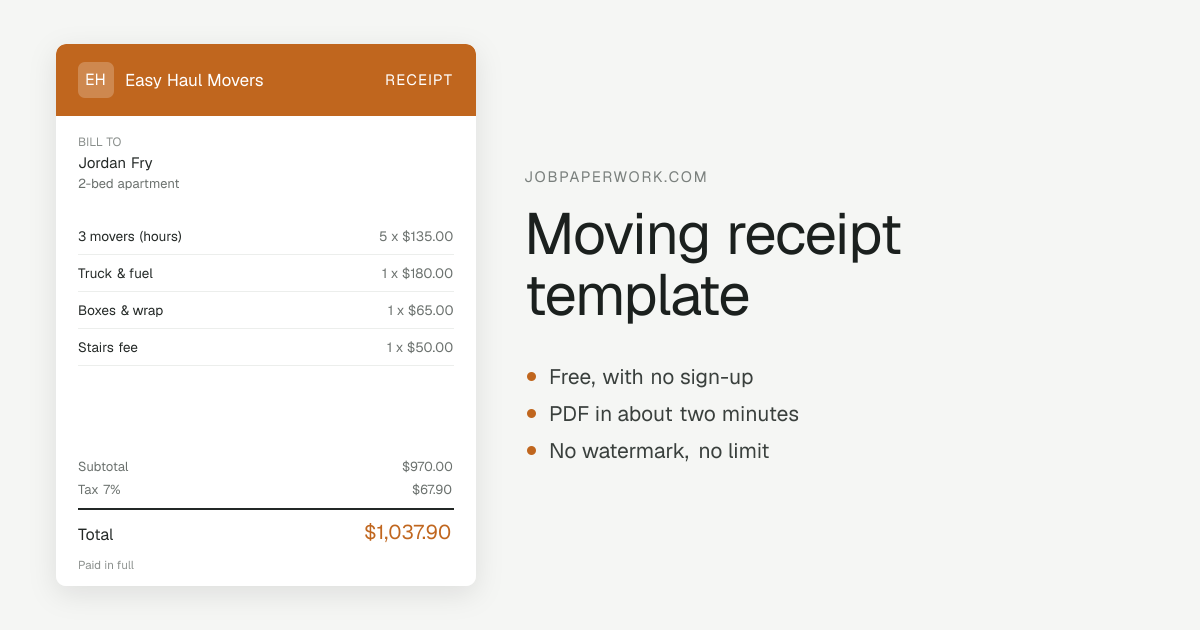
A PDF, and a link your customer can open in any browser. Word and Excel versions are not available yet — if a spreadsheet is what you need, this is not yet the tool for it, and saying so is cheaper for both of us than you finding out after typing everything in.
Pick how it looks
Six looks, from a plain classic sheet through a bold top band to a shop ticket, and your initials go on automatically until you upload a logo. See all six.
How to send it
Most customers want the paper on their phone, so the receipt goes out by WhatsApp, text or email, or as a link that needs no app and no account on their side. Or download the PDF to print it or keep it for your own records.
Questions
What should I do about items that were already damaged?
Note them before they go on the truck and put them on the receipt. Furniture that has been moved before is rarely pristine, and a scratch nobody recorded becomes a scratch you caused. Thirty seconds and a photograph settle it.
Should the receipt say how to claim?
Yes, and it is in your interest. A customer who finds a claims process on the paperwork follows it; one who finds nothing rings angry or writes a review. A named process also makes it far likelier that a small claim stays small.