

What goes on a moving service agreement
Office churn is the repeat work in this trade — a business that moves twenty desks every quarter, a property manager clearing and furnishing apartments. The agreement turns a series of one-off negotiations into a crew rate and a booking process, which is what an operations manager actually wants.
- Who is covered, and which sites
- The crew rate, per person per hour or per half day, fixed for the term
- Vehicle charges, and how many are included
- Notice required for a booking, and what a short-notice job costs
- Materials: crates, wrap and boxes, hired or supplied
- Out-of-hours and weekend working, and the rate for it
- Invoicing monthly in arrears, the term, and the notice
The sample line items and example prices this sheet opens with are on the moving invoice template — the same table, which is about the trade rather than about this paper, so it lives in one place rather than on all six.
What you get
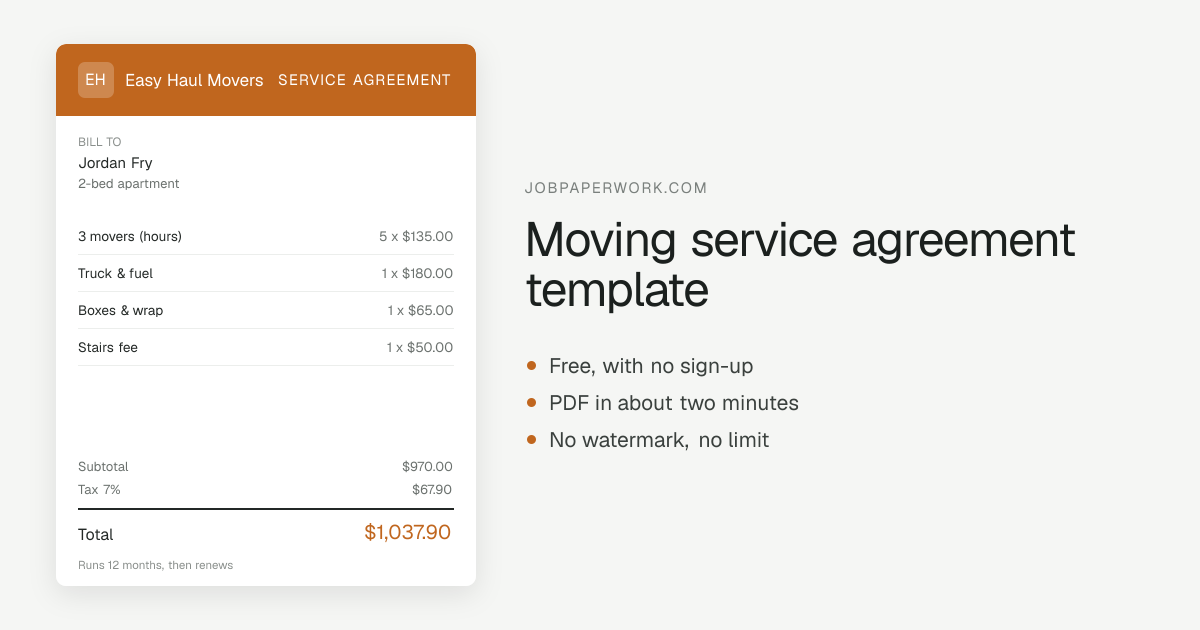
A PDF, and a link your customer can open in any browser. Word and Excel versions are not available yet — if a spreadsheet is what you need, this is not yet the tool for it, and saying so is cheaper for both of us than you finding out after typing everything in.
Pick how it looks
Six looks, from a plain classic sheet through a bold top band to a shop ticket, and your initials go on automatically until you upload a logo. See all six.
How to send it
Most customers want the paper on their phone, so the service agreement goes out by WhatsApp, text or email, or as a link that needs no app and no account on their side. Or download the PDF to print it or keep it for your own records.
Questions
What does an office actually want from a moving agreement?
Predictable booking. An operations manager moving desks every quarter does not want to re-tender each time; they want a number to ring, a known rate and a crew who has seen the building before. The rate matters less than the second of those.
Should crate hire be included?
Price it separately and say the hire period. Crates go out and come back late as a matter of routine, and a hire period written into the agreement is the only thing that gets them returned. Two weeks is usual, with a weekly rate after.