

What goes on a moving estimate
A moving estimate is a guess about volume and access, and both are routinely understated. People describe a two-bedroom apartment and forget the attic, the shed and the garage; they say parking is easy and mean a permit zone. What the estimate assumes about those two things decides whether the day runs over.
- Both addresses, and the date
- The volume: a room count, or a survey figure in cubic feet
- The crew size and the hours the price is built on
- Access at both ends: stairs, elevator, carry distance, parking and permits
- What is moving and what is not — attic, shed, garage, plants, safe
- Packing materials, and whether you are packing or they are
- The rate beyond the estimated hours, where it is charged hourly
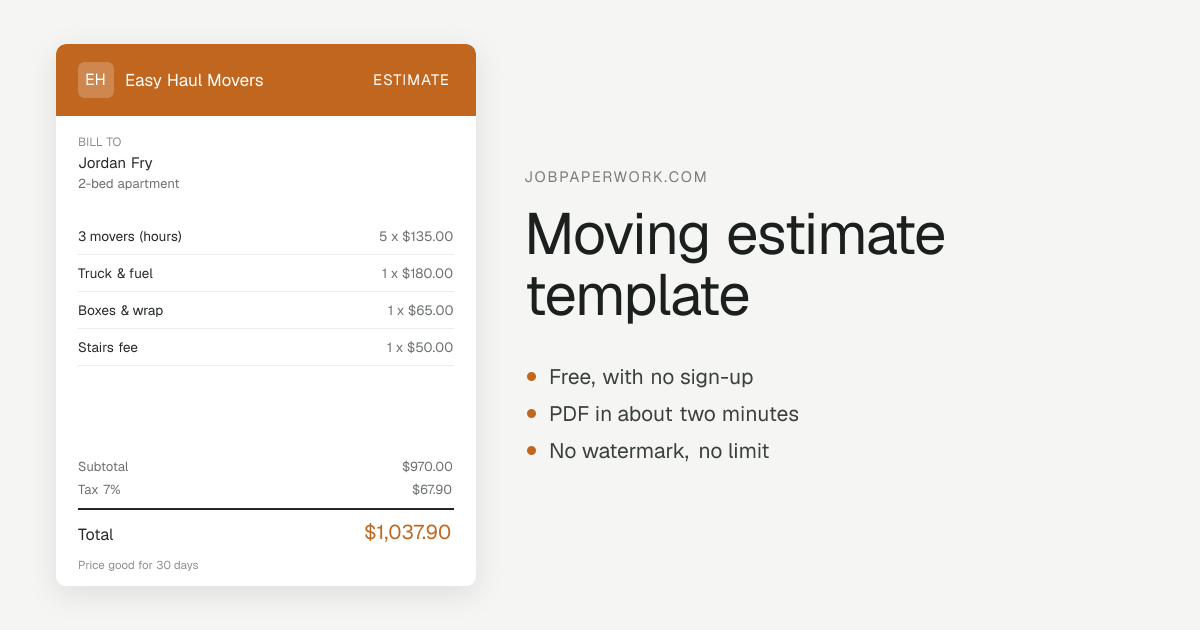
The sample line items and example prices this sheet opens with are on the moving invoice template — the same table, which is about the trade rather than about this paper, so it lives in one place rather than on all six. Working out the price itself? The markup calculator turns your cost and markup into the figure to put on the estimate, and shows the margin it leaves.
What you get
A PDF, and a link your customer can open in any browser. Word and Excel versions are not available yet — if a spreadsheet is what you need, this is not yet the tool for it, and saying so is cheaper for both of us than you finding out after typing everything in.
Pick how it looks
Six looks, from a plain classic sheet through a bold top band to a shop ticket, and your initials go on automatically until you upload a logo. See all six.
How to send it
Most customers want the paper on their phone, so the estimate goes out by WhatsApp, text or email, or as a link that needs no app and no account on their side. Or download the PDF to print it or keep it for your own records.
Questions
Should I survey before giving a price?
On anything bigger than a small flat, yes — even over video. Volume is always underestimated and access is never described accurately, and those two together are what turns a priced day into an overrun. A twenty-minute survey is the cheapest thing in the job.
What do I do about parking?
Name it on the estimate and say who is arranging the permit. A long carry from a space down the street adds hours to a move, and the customer who said parking was fine will not remember saying it. Price the carry distance you assumed.