

What goes on an HVAC estimate
A replacement estimate is a large number arriving in one go, usually in the week something failed. What makes it land is showing what the money is buying: the unit is perhaps half of it and the rest is ductwork, electrical and labor nobody had thought about. A single figure invites the customer to shop the box and ignore everything else.
- The existing system, and why it is being replaced rather than repaired
- The new unit: make, model, tonnage and efficiency rating
- Ductwork — inspected, modified, replaced or left alone, said explicitly
- Electrical work, and whether the existing supply is adequate
- The thermostat and controls, and whether they are in the price
- Permit, inspection, and removal of the old unit
- Any rebate or credit available, named rather than promised
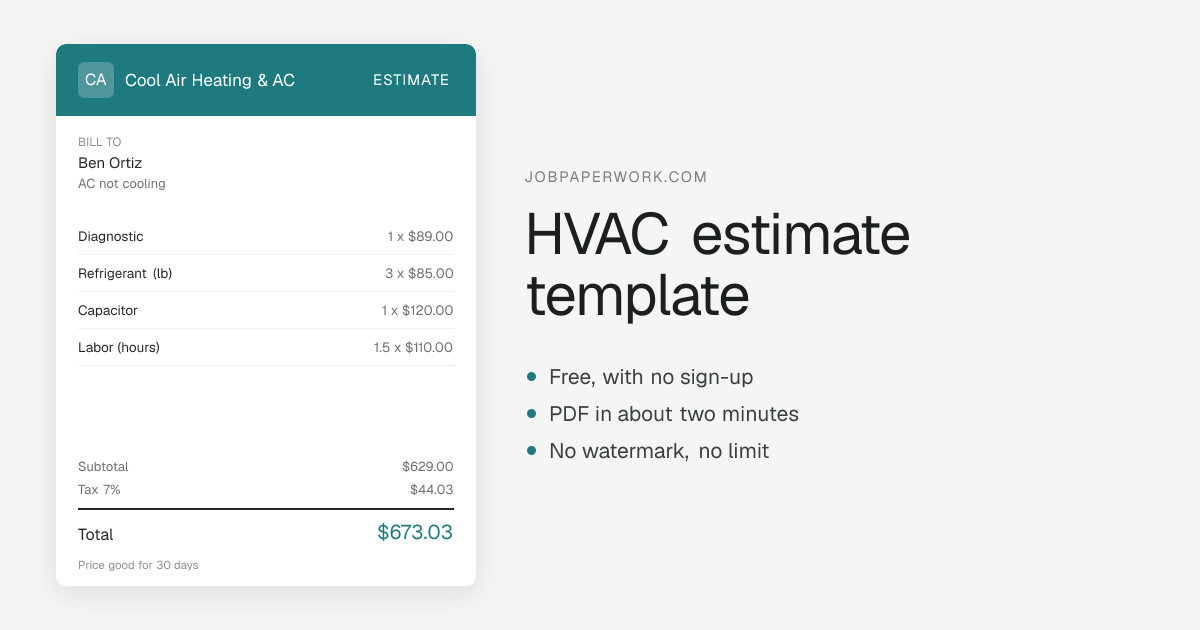
The sample line items and example prices this sheet opens with are on the HVAC invoice template — the same table, which is about the trade rather than about this paper, so it lives in one place rather than on all six. Working out the price itself? The markup calculator turns your cost and markup into the figure to put on the estimate, and shows the margin it leaves.
What you get
A PDF, and a link your customer can open in any browser. Word and Excel versions are not available yet — if a spreadsheet is what you need, this is not yet the tool for it, and saying so is cheaper for both of us than you finding out after typing everything in.
Pick how it looks
Six looks, from a plain classic sheet through a bold top band to a shop ticket, and your initials go on automatically until you upload a logo. See all six.
How to send it
Most customers want the paper on their phone, so the estimate goes out by WhatsApp, text or email, or as a link that needs no app and no account on their side. Or download the PDF to print it or keep it for your own records.
Questions
Should I show a rebate on the estimate?
Name it, do not net it off. Rebates are approved by somebody who is not you, and a customer who budgeted around a deduction that never arrives will hold you to it. Show the full price, and the rebate as a separate note about what they may be able to claim.
How do I justify my price against a cheaper quote?
Line by line, which is why the breakdown matters. A cheaper quote on the same tonnage is nearly always cheaper somewhere specific — no duct modification, existing electrical reused, a lower efficiency unit — and a customer holding both can see it at once if yours is itemized.