

What goes on a catering receipt
Two payments matter in catering and both want receipting: the deposit that holds the date, and the balance usually taken before the event. Between them they are the whole transaction, and the event itself leaves no other paper trail.
- The date paid, and the amount
- What it is: the deposit holding the date, or the balance
- The event date, the venue, and the guest count it was based on
- What the figure covers — food, staff, rentals, delivery
- The balance remaining, and when it falls due
- The cancellation position, where the deposit is non-refundable
- How it was paid
The sample line items and example prices this sheet opens with are on the catering invoice template — the same table, which is about the trade rather than about this paper, so it lives in one place rather than on all six.
What you get
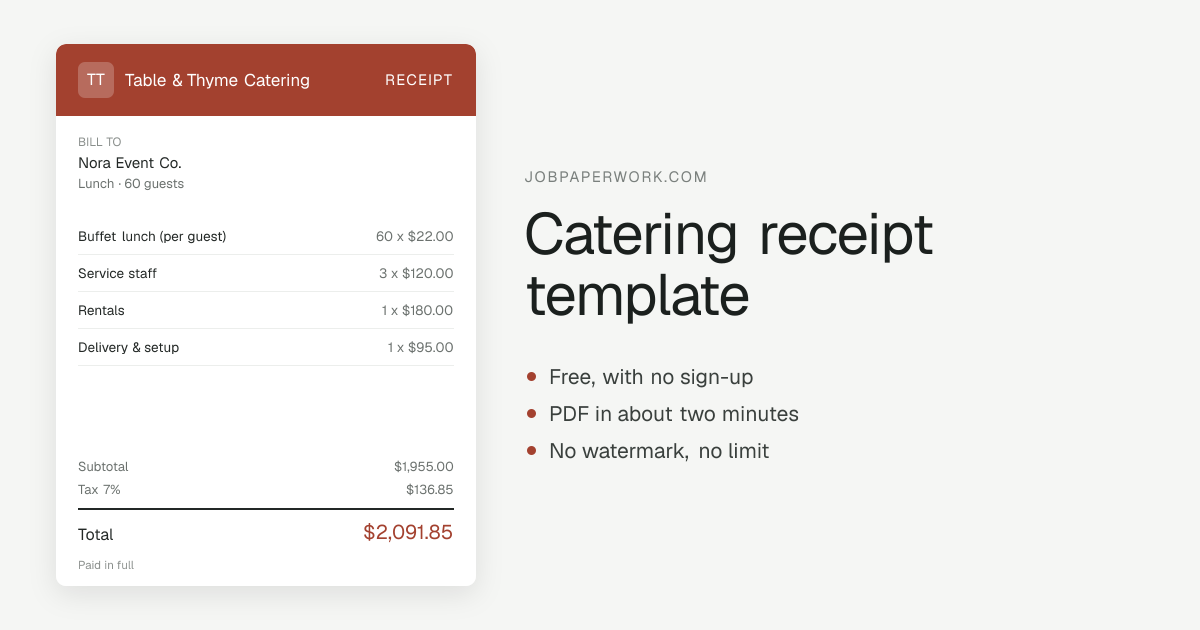
A PDF, and a link your customer can open in any browser. Word and Excel versions are not available yet — if a spreadsheet is what you need, this is not yet the tool for it, and saying so is cheaper for both of us than you finding out after typing everything in.
Pick how it looks
Six looks, from a plain classic sheet through a bold top band to a shop ticket, and your initials go on automatically until you upload a logo. See all six.
How to send it
Most customers want the paper on their phone, so the receipt goes out by WhatsApp, text or email, or as a link that needs no app and no account on their side. Or download the PDF to print it or keep it for your own records.
Questions
Should the balance be taken before the event?
On event work, generally yes, and say so when the deposit is taken. Chasing a balance after a wedding is difficult, and after a corporate event it disappears into a payment run you have no control over. Before the day is normal in this trade and clients expect it.
What if the guest count changes after the balance is paid?
Note the count the balance was calculated on, on the receipt. Numbers move right up to the day, and a receipt recording what was charged for makes a final adjustment arithmetic rather than an argument.