

What goes on a catering quote
Events are quoted because the client is signing for a fixed menu on a fixed date, often months out. Everything about it is known except the guest count and the weather, so those two are what the quote has to handle explicitly.
- The date, the venue, and the service times
- The menu in full, course by course
- The per-head price, and the minimum numbers it assumes
- Staff included, and the overtime rate past the agreed finish
- What the venue supplies, and what you are bringing
- The deposit, the balance date, and the cancellation terms
- Dietary provision, and the cost of late additions
The sample line items and example prices this sheet opens with are on the catering invoice template — the same table, which is about the trade rather than about this paper, so it lives in one place rather than on all six. Working out the price itself? The markup calculator turns your cost and markup into the figure to put on the quote, and shows the margin it leaves.
What you get
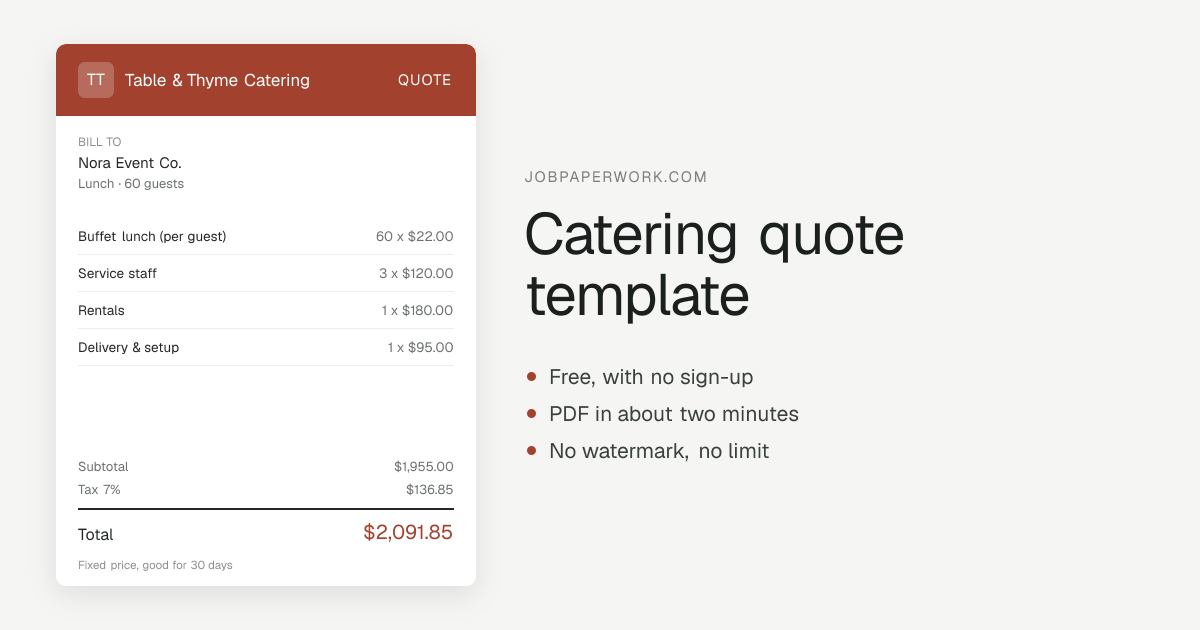
A PDF, and a link your customer can open in any browser. Word and Excel versions are not available yet — if a spreadsheet is what you need, this is not yet the tool for it, and saying so is cheaper for both of us than you finding out after typing everything in.
Pick how it looks
Six looks, from a plain classic sheet through a bold top band to a shop ticket, and your initials go on automatically until you upload a logo. See all six.
How to send it
Most customers want the paper on their phone, so the quote goes out by WhatsApp, text or email, or as a link that needs no app and no account on their side. Or download the PDF to print it or keep it for your own records.
Questions
Should I quote a minimum number?
Almost always. A menu priced for eighty does not work for thirty — the staffing and the prep do not scale down — and a minimum protects the margin without having to re-quote. Say it plainly and most clients understand it immediately.
What should the quote say about overtime?
An hourly rate per member of staff, and when it starts. Events run late as a matter of routine, and a host enjoying themselves has no idea they are past the agreed finish. A rate agreed in advance makes that a simple conversation at the time.