

What goes on a welding quote
A quote fits a repeat part or a job with a drawing. Once the dimensions are fixed and the steel is specified the hours are knowable, and a fixed price wins work in a trade where most customers have no idea what welding ought to cost.
- The item, by drawing reference or by a part you have made before
- Steel specified exactly, including grade where it matters structurally
- Quantity, and the price per unit where there is more than one
- The fixed price, covering fabrication, finish and delivery
- The tolerances the price is built on
- Lead time, and whether finishing is inside it
- Both signatures, and how long the price stands
The sample line items and example prices this sheet opens with are on the welding invoice template — the same table, which is about the trade rather than about this paper, so it lives in one place rather than on all six. Working out the price itself? The markup calculator turns your cost and markup into the figure to put on the quote, and shows the margin it leaves.
What you get
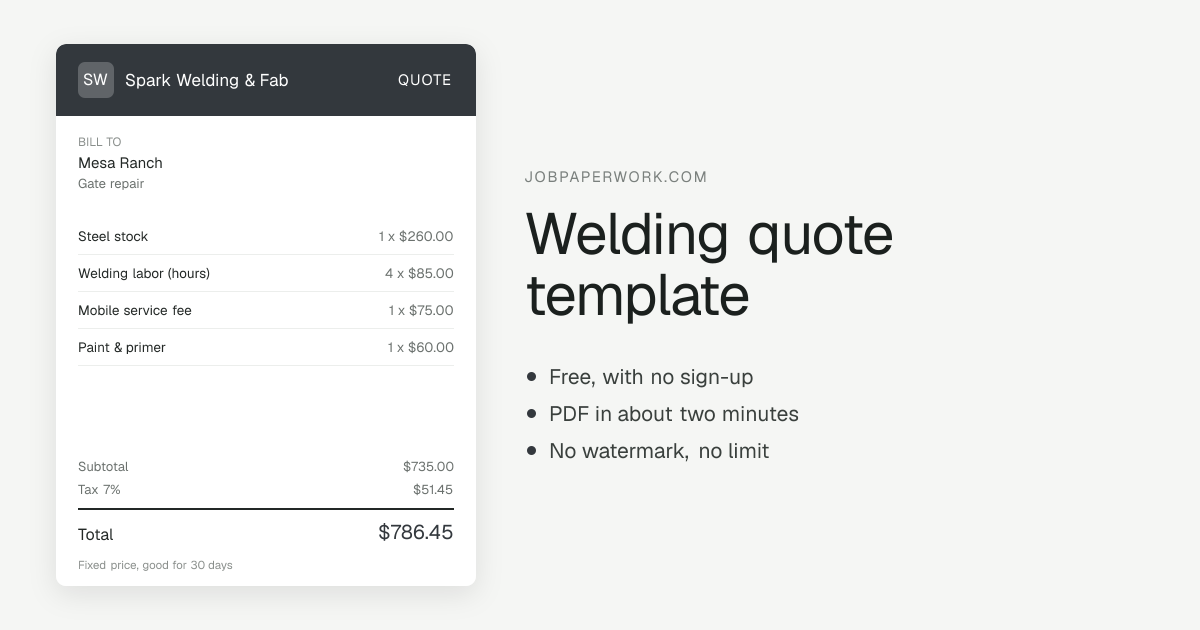
A PDF, and a link your customer can open in any browser. Word and Excel versions are not available yet — if a spreadsheet is what you need, this is not yet the tool for it, and saying so is cheaper for both of us than you finding out after typing everything in.
Pick how it looks
Six looks, from a plain classic sheet through a bold top band to a shop ticket, and your initials go on automatically until you upload a logo. See all six.
How to send it
Most customers want the paper on their phone, so the quote goes out by WhatsApp, text or email, or as a link that needs no app and no account on their side. Or download the PDF to print it or keep it for your own records.
Questions
Should I quote per unit or for the batch?
Both, and show the setup separately. The first one carries the setup and the jig; the tenth does not, and a customer who can see that will often order more. One blended price per unit hides the only argument you have for a bigger order.
What tolerances should I state?
The ones you can actually hold, in fractions of an inch. Fabrication disputes are almost always about fit rather than weld quality, and a tolerance on the quote is the difference between a part being rejected and a part being accepted with a shim.